Natural Options to Reverse Parkinsons Symptoms

Month: October 2009

Low Blood Pressure and Parkinsons

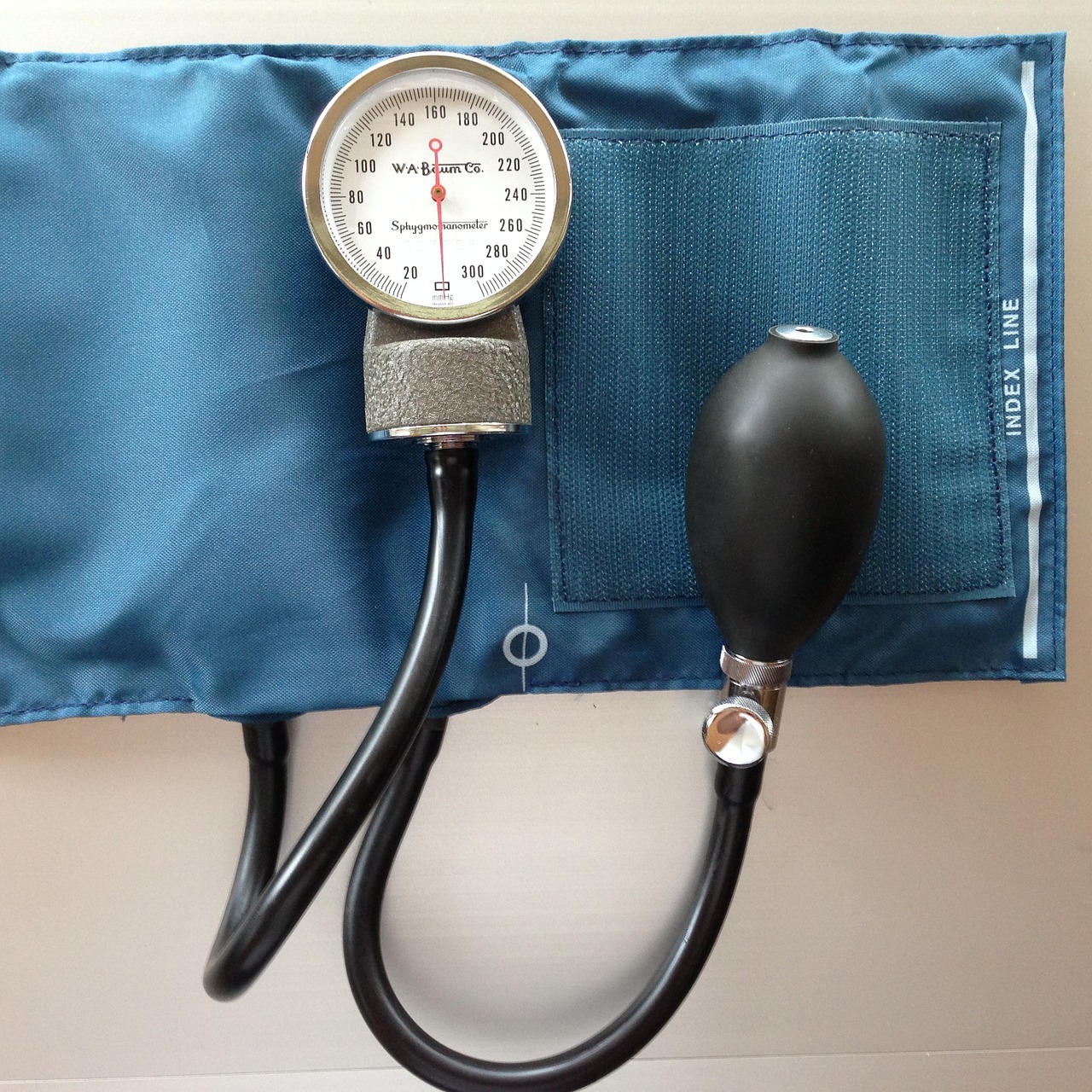
The following questions were sent by Nancy whose Dad has low blood pressure and Parkinsons.
Question:

Saw your interesting article on the internet last night. My Dad was diagnosed with Parkinson’s about 10 years ago. He has been on the required medication, such as Levadopa and Requip, maybe some others. My most concern is the Requip.

He has been the hospital all week because of his low blood pressure. For some reason they don’t know what to do about it. I have been told that the requip causes low blood pressure. Can he safely get off of the stuff? And how?

Response:

Once a person starts taking medication, it is very tricky to stop. The body goes into a type of withdrawal. It is important to work closely with the doctors if the intent is to stop taking any Parkinson’s meditations (or reduce the dosage). It is not a smart idea to go cold turkey on the medications.

Question:

How can you tell if someone has been misdiagnosed with Parkinson’s?

Response:

Parkinson’s is a garbage can type diagnosis which means it covers a wide range of symptoms. Research estimates show that about one third of the people who have been diagnosed with Parkinson’s were misdiagnosed. This happens because there is no definitive test for it. Most doctors eliminate other possibilities – and if nothing is left – it is diagnosed as “Parkinson’s”.

Question:

Has all this medication put him in the condition he is in?

Response:

You can partially answer your own question by asking your pharmacist for the list of side effects from the medications he takes. If the symptoms he is experiencing are on the list, there is certainly a good possibility interactions of the medications might be the culprit.

There is also another problem that emerges when more than one medication is taken: drug interactions and depletions. Additional problems are caused sometimes when certain medications are combined. I refer people to Randy Mentzer who is a nutritional counselor and compounding pharmacist.

Randy does a full analysis of everything a person puts into their body, consults with the patients and writes up a detailed report of recommendations. He can sometimes make a natural medications that can substitute for the medication the person may be taking that is causing the problem.

Most medical doctors are not trained to do such an analysis. I might add it takes someone like Randy years and years to learn what these medications do and how they interact. It is a specialty in itself.

Question:

I see Parkinson’s patients and say to myself,

“My Dad does not act like that.”

How interesting, I always encourage people to trust their own intuition. It may be that it is time to entertain other possibilities.

Question:

Can a person safely get off of the medication to see if he really needs it at all?

Response:

As I mentioned above, weaning off of medications is a tricky business. You have to work very closely with your doctors and reduce the dosages very slowly and cautiously.

Question:

Just would like your opinion be and what can I do for him?

Response:

I am not a medical doctor, so I can only offer my “opinion” if this were my Dad. To be clear, I am not suggesting you do these things! This is only what I would do if this were my Dad who has low blood pressure and Parkinsons.

First, I would do everything in my power to get my Dad out of the hospital with the doctors’ blessings. There are many bacteria floating around hospitals these days, so people can get sicker sometimes because of exposure to new infections.

Second, I would get a consultation with a Nutritional Counselor or Compounding Pharmacist. 

Third, I would order a bioenergetic assessment from Dr. Ivy Faber (which would likely point to possible causes of the symptoms).

Fourth, I would get a consultation with a naturopathic doctor.

Fifth, I would do everything possible to make sure my Dad was eating live foods.

Sixth, I would do something for my self as his son, so I could have some distance from the urgency of the problem at hand. If I am in fear as his son, it will do him no good whatsoever.

All of the above steps make it possible to approach the crisis in different ways, to step outside the box so to say. I am confident your current doctors are doing everything possible to help your Dad out, but specialists look at problems from the perspective of their own specialty. That is what they are trained to do!

If I were in your shoes,

  • I would begin thinking about the problem from different perspectives.
  • I would involve other health care practitioners in addition to the neurologists.
  • I would remind myself that the body always knows how to heal itself.

Give the body what it needs to come back into balance and your Dad’s body will take care of the rest.

Robert Rodgers, Ph.D.
Founder 2004
Parkinsons Recovery

 

Can You Reverse Parkinson’s Disease

Everyone would like to know an answer to the question: can you reverse Parkinson’s disease? And of course, everyone would like the answer to be yes. The honest answer is – it depends. Recovery from Parkinson’s happens when we trust the body’s ability to heal itself. If there is no trust – recovery flops.

Success depends on holding the expectation that recovery can be successful. If we believe there is no hope – any chronic condition will fail. I will illustrate this process by focusing on the belief that many people hold the belief that gray hair goes hand in hand with aging. No one escapes.

Have you happened to notice that this is not true of everyone, even people who do not die their hair? I know my uncle retained his dark hair as he aged. How did he do it?

If we hold the belief that grey hair does does not go hand in hand with aging,  it is likely the color of a person’s hair may not lose their color, or at least not entirely.

The secret to reversing the loss of hair color starts when thoughts are challenged that gray hair is inevitable with aging. Most people do hold the belief grey hair is inevitable as we age. But is it really?

Pantothenic acid (vitamin B5) helps retain hair color. There are other supplements that help reverse grey hair as well. Essential oils work wonders. When I personally take B5, I have more dark hair than grey. Why not take B5?

Below is a listing of  reasons that stifle action:

“Everyone knows grey hair is inevitable as we age.”

“I don’t have the extra funds to pay for a Vitamin B5 supplement”

“Well, I have the money but I would rather spend it on going out to lunch every week.” 

“I have a limited budget.”

“You can’t trust the quality of vitamins anyway.”

I invite you to sense in to this type of restrictive thinking . They all insure that a person will never start taking vitamin B5 and other therapies that help darken hair naturally. Why bother?

Can You Reverse Parkinson’s Disease? These are Typical Reasons Why Not

This process of inaction and indecision is no different in substance from  reasons that sideline taking the action needed to celebrate recovery from Parkinson’s:

“I do not have the funds to pay for the therapies that are supposed to help me feel better.”

“Besides, everyone knows that the condition is degenerative. Why fight the inevitable?”

“I don’t have the energy to take good care of myself. It is more important to support the children”

“Hello? Everyone else lets Parkinson’s take its course.”

My point of course is that these limiting thoughts insure that symptoms of Parkinsons persist. We always manifest our thoughts.

  • If they are positive and hopeful, we take actions necessary to reverse symptoms.
  • If they are negative, we do nothing and symptoms continue to worsen.

The better choice is to hold the expectation recovery can happen when we take the actions needed to heal from the inside out.

My answer to the question “Can You Reverse Parkinson’s Disease” is yes when you remove the limiting thoughts that stifle action. Remove, release, detach, eject and shield all thoughts of limitation. Replace them with thoughts of abundance. You will get exactly what you think.

Acknowledge all the reasons you find yourself paralyzed from taking action to feel better: No exercise. Bad diet. Eat dognuts. You get the point.

Consider adopting the following thoughts as mantras about all of your current and future therapies:

I have all the funds I need to pay for the therapies that will help my body heal.

I live on the unqualified generosity of the universe. Taking action to help myself recover gives me the energy, stamina and power to become all that I am.

I have all the money I need to take good care of myself.

I have all the resources I need to recover

Track your thoughts of limitation that “there is not enough.” We all have them. We recycle thoughts of limitation by the hundreds day in and day out as we ride the same hamster wheel in the cage of our minds. Open the door to your cage.

Shift your thoughts about what is possible.

Get well.

Change your life.

Robert Rodgers, Ph.D.
Founder 2004
Parkinsons Recovery

Resources
Parkinsons Recovery Radio Network
Aqua Hydration Formulas

Books
Language of Recovery

Pioneers of Recovery
Five Steps to Recovery


Change Your Brain

Here are some resources to share on how to change your brain:

https://www.befitoverfifty.com/pages/thera.htm?source=OverTo

Although the first part is “depressing” to read, the section on “Why Exercise Is So Important” is simple and motivating. There are yet more exercise programs for people with muscular and neurological disorders on this link, but I am not sure of their availability.

I am reading a new book (to me), Train Your MIND, Change Your BRAIN by Sharon Begley, (Ballantine). This is a survey of how the brain adapts to the kind of thinking we do and the feeling modes that we experience.

The Dalai Lama figures in this story with his patient challenge to neurological researchers on the reverse of the belief “the brain creates the mind or the mind is the result of brain activity”–doesn’t the mind affect the way the brain operates? Beliefs in science are hard to confront.

This book is about research on this confrontation. There are stories of experiments in re-training the thinking of people with depression and obsessive/compulsive disorders. As they corrected for their distorted thinking, they experienced relief, even when medication was supposed to give them relief. Re-training our thinking is crucial because our brains respond to the perception of our reality. The experiments related in the book can inspire ideas on working our own programs. Parkinson’s isn’t even mentioned, but strokes are.

The evidence shows that plasticity or brain/neural changing doesn’t occur only in childhood but throughout life. A Tibetan monk, whom the Dalai Lama knew, was imprisoned by the Chinese for 18 years, a time which included torture. When freed, he was found to be the same gentle, mentally sharp man that the Dalai once knew, just like he was before the imprisonment. Was he ever afraid? Yes, he was afraid that he would lose his compassion for the Chinese.

“Because of forgiveness, his bad experience with Chinese not got worse,” said the Dalai Lama.

This anecdote shows that mind is over matter. It is possible to change our brain when we train our mind. The book goes on to explore, from the Buddhist perspective, what mind is or does. The link between Buddhist thinking and scientific neurological research is attention and attention training.

Thanks for all that you do!

Alan

Robert Rodgers PhD
Founder 2004
Parkinsons Recovery