
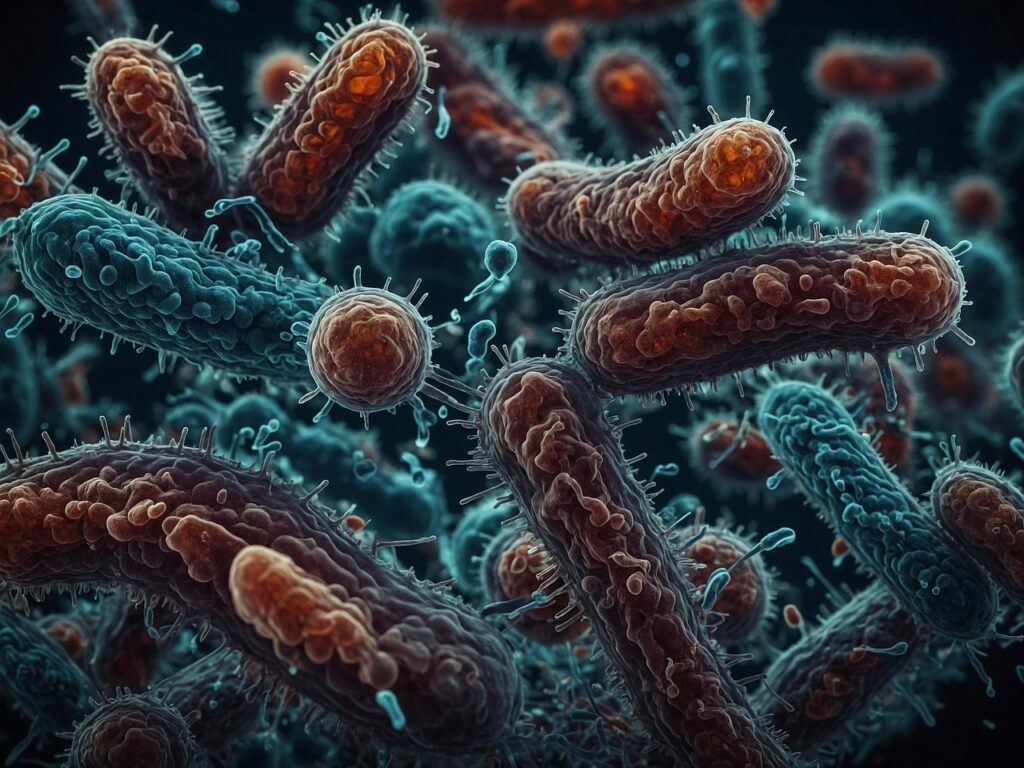
The recent studies listed below provide compelling evidence of an association between infections and a diagnosis of Parkinsons. Central nervous infections include Streptococci, Tuberculosis, Lyme disease, Neurosyphilis, spinal abscess and others.
My standard recommendation for individuals dedicated to launch a successful journey down the road to recovery is to determine the cause of symptoms first. Once you know the cause, appropriate therapies can be used to address it.
A formidable complication arises when there are a multiplicity of causes. Infections may not be the only one. Toxins, trauma and limiting thoughts about the prospects of recovery can all be causes along with infections.
Oh my. How in the world do you figure out a viable therapy to treat infections? There are two options:
- Work with your doctor to identify which infection needs to be treated.
- Support your body to heal from the inside out.
A limitation of the first option is that antibiotics are the standard treatment. The good news is that antibiotics can usually address an infection successfully. The bad news is that they kill the good bacteria as well as the bad in the gut. Given that digestive problems drive symptoms, this is not a welcome outcome.

A limitation of the second option is that while there are many options that nurture healing from the inside out, some will work much better than others for us and everyone is different. Healing from the inside out requires a strict adherence to a toxin free diet. This means no packaged foods, regular exercise and a transformation of beliefs that symptoms are destined to get worse. Traumas that have been embedded at the cellular level also need to be released.
Did you get thoroughly exhausted from reading these limitations? I certainly did. Still, pursing the second option enables the body to heal not only infections, but release toxins and bring a compromised digestive system back on line. Taking a long term strategy which requires patience, commitment and focus will support recovery in the long run.
Since I am a researcher and not a medical doctor, my focus is on the second option which involves helping the body come back into balance and harmony with natural methods and approaches. The body does need extra support when symptoms are problematic.

New therapies have happily emerged in the last few years that offer healing options supported by research studies. These involve the delivery of frequencies through light and sound. Down the road this is unquestionably the medicine of the future.
While the challenge to heal from the inside out is indeed challenging, recent treatment options are making partial or full recovery possible for more and more people with neurological problems. The good news is that more people are celebrating a relief from their symptoms today when compared to 20 years ago.

Recent Studies on Infections and Parkinsons
Neurol Sci. 2026 Jan 6;47(1):110. The spectrum of movement disorders in neurosyphilis: A systematic review
Abstract
Background: Neurosyphilis is a well-recognized mimicker and may present with diverse movement disorders resembling neurodegenerative or autoimmune syndromes. This systematic review aims to elucidate the comprehensive clinical, laboratory, imaging, and outcome spectrum of movement disorders in neurosyphilis.
Methods: This systematic review followed PRISMA guidelines with a protocol registered in PROSPERO (CRD420251135620). PubMed, Embase, Scopus, and Google Scholar were searched. Eligible studies included case reports, case series, and observational cohorts with confirmed or probable neurosyphilis and clinically diagnosed movement disorders. Data on demographics, clinical features, cerebrospinal fluid, neuroimaging, treatment, and outcomes were extracted.
Results: We analyzed a total of 48 individual cases reported across 44 publications and two retrospective cohorts (n = 223, with 61 movement disorder patients). The mean age was 47 years (range 10-83), with 76.3% male and 76.3% human immunodeficiency virus negative. Movement disorder subtypes included ataxia (28.9%), parkinsonism (18.4%), choreiform disorders (15.8%), dyskinesias/dystonia (15.8%), and myoclonus (7.9%). The orofacial “candy sign” was noted in 7.9%. In 10 cases, complex presentations mimicked progressive supranuclear palsy, corticobasal degeneration, Creutzfeldt-Jakob disease, and autoimmune encephalitis. CSF serology was positive in 84.2% of cases. Imaging showed cerebral or cerebellar atrophy (34.2%), basal ganglia infarction (15.8%), white matter changes (15.8%), hydrocephalus (5.3%), or normal scans (18.4%). Penicillin was mainstay of therapy (57.9%). Outcomes included marked improvement in 44.7%, partial recovery in 34.2%, persistent decline in 15.8%, and death in 5.3%.
Conclusion: Neurosyphilis should be recognized as a treatable cause of secondary movement disorders. Ataxia and parkinsonism predominate, but frequent misdiagnosis delays therapy.
J Med Microbiol. 2026 Mar;75(3):002136. Association between spirochaetal infection and neurodegenerative diseases: a systematic review and quantitative synthesis of observational studies
Abstract
Introduction. Neurodegenerative diseases, including Alzheimer’s and Parkinson’s, are a growing global health concern. While age remains the primary risk factor, infectious agents have been proposed as potential contributors to disease onset or progression.
Spirochaetal bacteria, such as Treponema pallidum, Borrelia burgdorferi and Leptospira spp., can invade the central nervous system, yet the extent to which these infections influence neurodegenerative outcomes remains unclear.
Aim. This systematic review aimed to evaluate observational evidence on the association between spirochaetal infections and neurodegenerative diseases and to identify gaps in the literature to inform future research.
Methodology. A systematic search of SCOPUS, EMBASE, PubMed/MEDLINE, Web of Science and CINAHL was conducted for studies published between January 2000 and May 2025. Eligible studies were observational, involved adult human populations and reported both spirochaetal infection and cognitive or neurodegenerative outcomes using standardized methods. Data were extracted using a standardized form. Owing to heterogeneity in study design, diagnostic approaches, outcome measures and reporting formats, an overall pooled meta-analysis was not feasible; however, a quantitative synthesis using meta-analytic methods was conducted for studies reporting mini-mental state examination data. Risk of bias was assessed using the Newcastle-Ottawa Scale.
Results. Twenty-seven studies met the inclusion criteria: 13 on T. pallidum, 13 on B. burgdorferi and one on Leptospira spp. No eligible studies were found for Brachyspira spp., and studies involving Treponema denticola were excluded due to confounding by periodontitis. Studies investigating syphilis and leptospirosis consistently reported cognitive impairment and increased dementia risk. In contrast, findings for Lyme disease were heterogeneous, with some studies reporting persistent symptoms or increased Alzheimer’s risk, while others found no long-term cognitive effects.
Conclusion. This review highlights a potential link between spirochaetal infections and neurodegenerative outcomes, particularly for syphilis and leptospirosis. Evidence for Lyme disease remains inconclusive.
******
ReviewViruses. 2025 Jan 31;17(2):203. Viruses and the Brain-A Relationship Prone to Trouble
Abstract
Neurological disorders, some of which are associated with viral infections, are growing due to the aging and expanding population. Despite strong defenses of the central nervous system, some viruses have evolved ways to breach them, which often result in dire consequences.
In this review, we recount the various ways by which different viruses can enter the CNS, and we describe the consequences of such invasions. Consequences may manifest as acute disease, such as encephalitis, meningitis, or result in long-term effects, such as neuromuscular dysfunction, as occurs in poliomyelitis.
We discuss evidence for viral involvement in the causation of well-known chronic neurodegenerative diseases, such as Alzheimer’s disease, Parkinson’s disease, amyotrophic lateral sclerosis, multiple sclerosis, as well as vascular dementia in the elderly.
We also describe the approaches currently available to control a few of the neural viral infections. These include antivirals that are effective against human immunodeficiency virus and herpes simplex virus, as well as vaccines valuable for controlling rabies virus, poliomyelitis virus, and some flavivirus infections. There is an urgent need to better understand, at a molecular level, how viruses contribute to acute and, especially, chronic neurological diseases and to develop more precise and effective vaccines and therapies.
******
Below is a 2012 study of 18,648 patients with Parkinsons that kicked off the interest among researchers in the connection between infections and Parkinsons
Int J Epidemiol. 2012 Apr 19;41(4):1042–1049. doi: CNS infections, sepsis and risk of Parkinson’s disease
Abstract
Background Neuroinflammation may play an important role in the aetiology of Parkinson’s disease (PD); however, little is known about infections in relation to future PD risk.
Methods We conducted a register-based nested case–control study in Sweden to examine infections of the central nervous system (CNS) and sepsis in relation to PD with 18?648 patients and 93?240 matched controls. We defined the index date as the date of first recorded PD diagnosis in the Swedish Patient Register.
Results Overall, PD patients were more likely to have a previous hospitalization for CNS infections [odds ratio (OR)?=?1.5, 95% confidence interval (CI): 1.2–1.9] or sepsis (OR?=?1.6, 95% CI: 1.4–1.7) than controls, largely due to hospitalizations in the year before PD identification (CNS infections: OR?=?3.0, 95% CI: 1.6–5.7; sepsis: OR?=?3.5, 95% CI: 3.0–4.0). However, we found that subjects with multiple CNS infections at least 5 years before the index date had higher PD occurrence than those without CNS infections (OR?=?3.3, 95% CI: 1.4–8.2), whereas the corresponding OR for sepsis was 1.4 (95% CI: 0.8–2.4). After the index date, PD patients were more likely to be hospitalized for CNS infections [hazard ratio (HR) =1.8, 95% CI: 1.2–2.7] or sepsis (HR?=?2.2, 95% CI: 2.1–2.4) than controls.
Conclusions This study provides preliminary evidence for an association between CNS infections, but not sepsis, and a higher future risk of PD. It also shows that PD patients were more prone to CNS infections and sepsis than controls.
Robert Rodgers PhD
Founder 2004
Parkinsons Recovery ®
https://www.parkinsonsrecovery.com
robert@parkinsonsrecovery.com
0 Comments
1 Pingback