
Hypomimia or “facial masking” is a restriction in the ability of an individual to express their emotions with facial expressions. The individual has a frozen, blank stare, despite the fact that intense feelings may be experienced. Smile therapy has is shown by research to thaw a frozen face.

Is there any reason to bother with doing smile therapy when facial masking is not an issue for you? My surprise answer is yes. A recent discovery is that smile therapy also improves gait disturbances.
- Why in the world might this be the case?
- How can flexible movements in a persons face improve gait disturbances?
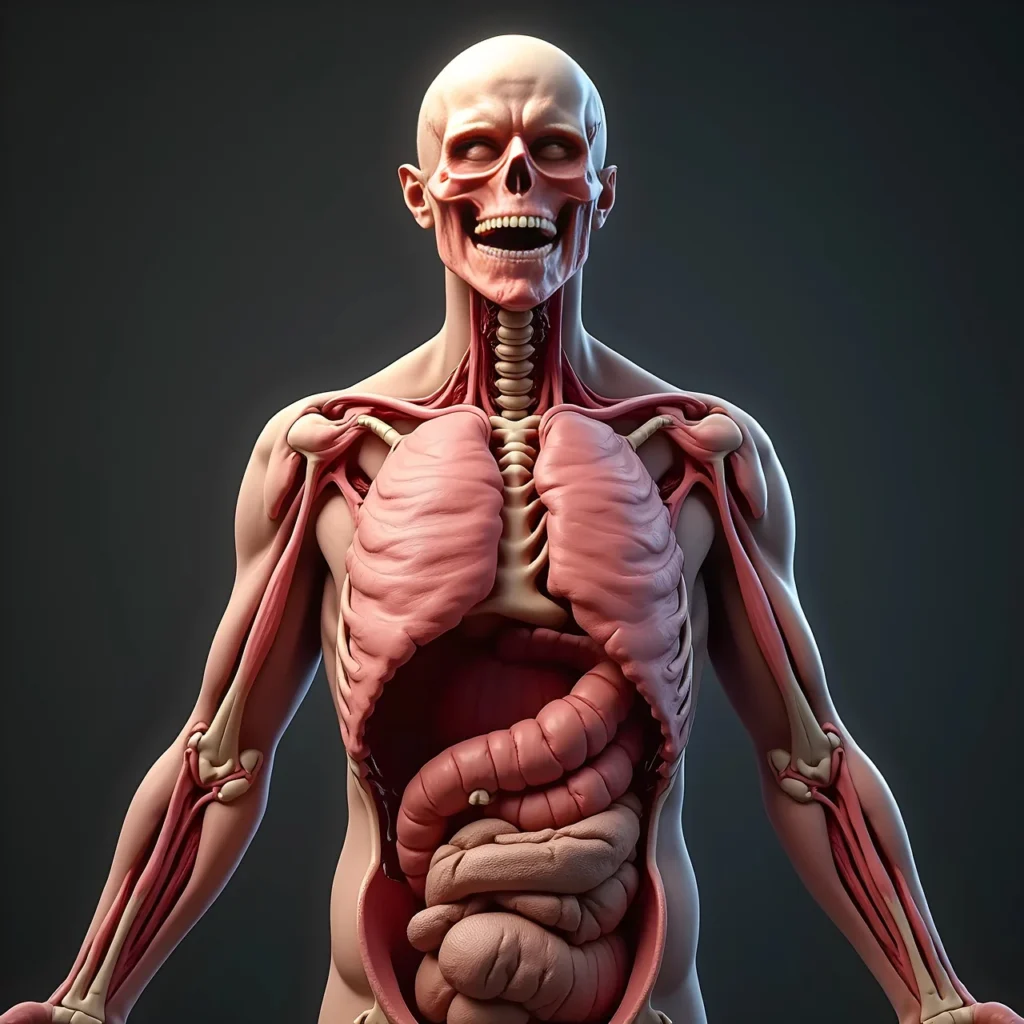
A primary cause of gait disturbances is a compromised digestive system. As it turns out, the stomach meridian connects multiple point on the face to both feet. We actually do not need to see more evidence evidence to realize improving facial expressions go hand in hand with improving gait disturbances.
What is Smile Therapy?
Smile therapy consists of exercises to facilitate the ability of a person to express their emotions. Exercises encourage the active, voluntary movement of facial muscles to combat facial rigidity.
Smile training involves facial muscle exercises to improve gait speed and reduce slowness of movement. Exercises involve making “surprised” faces and performing “silly” fish-like faces to stretch the muscles around the mouth, eyes and forehead.
Research on the Connection between Smile Therapy and Gait Disturbances
Phys Ther Res. 2024;27(3):173-179. Effects of Smile Training on Gait Disturbance in Parkinson’s Disease Patient with Neuropsychiatric Symptoms: A Single Case Design
Abstract
Objective: To verify the efficacy of smile training in improving gait disturbances in patients with Parkinson’s disease (PD) exhibiting neuropsychiatric symptoms.
Methods: A single-case design with three intervention periods (B1, A1, and B2) was used. During periods B1 and B2, 10 min of smile training (facial muscles training and positive thinking training) was performed before the usual exercise therapy. During the A1 period, the participant received only the usual exercise therapy. During the intervention period, the Timed Up and Go test (TUG) was performed daily in both directions. Tau-U was calculated to determine the effect size of the TUG test time and the number of steps taken during each period.
Movement Disorder Society-Unified Parkinson’s Disease Rating Scale (MDS-UPDRS) Part III, Hospital Anxiety and Depression Scale (HADS), 10-meter walk at maximum speed, Berg Balance Scale, and Characterizing Freezing of Gait Questionnaire (C-FOGQ) were administered on the day before the start of the intervention and the last day of each period.
Results: Comparisons of A1 to B2, TUG time, and the number of steps taken on both turns revealed large reductions (Tau-U ?0.74, p <0.01). The 10-meter walk speed and MDS-UPDRS Part III bradykinesia scores improved, whereas the frequency of gait freezing on the C-FOGQ remained unchanged. The HADS scores did not show significant changes; however, the participant made more positive statements in his reflections.
Conclusion: Smile training may be an effective intervention for improving gait and other motor symptoms in patients with PD.
Robert Rodgers PhD
Founder 2004
Parkinsons Recovery®
https://www.parkinsonsdisease.me
Leave a Reply