About Parkinsons Recovery®

Natural Options that Reverse Symptoms

Page 11 of 39

Best Therapies to Become Symptom Free of Parkinson’s

I have been a subscriber for awhile now and have tried some of the treatments (qigong, dental appliance). I have explored the best therapies to become symptom free of Parkinson’s. Although I’m still not symptom-free I remain hopeful I’ll find something that eventually works for me.

Have you ever polled or collated responses from subscribers to see if, and which of, these methods have also helped them to become symptom-free? Thanks for all you do and for your uplifting spirit!

Mary

Response:

The reference to “subscriber” in Mary’s question above is to the Parkinsons Recovery Membership Program. The program involves an interface with a website that is updated daily with wide variety of information, support and resources that support ongoing recovery. I record meditations every week that are posted, the most recent of which involve mindfulness invitations.

I have had four thoughts after reading your question. I will reflect on each one rather than censoring or editing them!

First, I discovered something fascinating since I began researching how people succeed in reversing their symptoms. Few people actually realize they are feeling better and better. The recovery process is slow and difficult to track. The focus tends to reside on symptoms that are in your face, so few people actually acknowledge and celebrate the progress they are making toward recovery as evidenced by symptoms that do reverse.

I have discovered this observation applies to everyone. If you ask me how I am feeling now when compared to six months ago – my response would be – I do not know. I really do not have have the memory capability to know one way or another. Am I feeling better, the same or worse? I do not have a clue. So what are the best therapies to become symptom free of Parkinson’s? Most people cannot say because they do not track their progress toward recovery.

When you say “although I am not symptom free” I am wondering if you have actually been successful with your recovery process and just have not acknowledged it.

Second, I have an invitation for you. Ask five persons you know who do not have a diagnosis of Parkinsons the following question:

Are you symptom free today?

Ask a family member, a friend, a stranger – whomever you happen to encounter today.
Of course, I can not know the results of your informal survey, but I predict that 4 out of 5 or even 5 out of 5 persons (who do not have a diagnosis of Parkinson’s) will report a symptom of one type or another that is worrisome to them – perhaps fatigue or depression or high blood pressure or mood swings or a back ache or … We all occupy a body which presents challenges throughout our lives.

I would recommend that instead of focusing on symptoms – which triggers a series of low frequency thought forms – focus on what you love to do in your life. Make doing what you love to do happen as frequently as possible.

Third, as for polling my audience – the answer is no. There is a reason. I have discovered in my research that the factors which cause neurological difficulties are truly multifaceted. The therapies that will help you are keyed to the causal factors that happen to be at play for you and you alone.

When I examine the research on the various therapeutic options that are available to people – and there are dozens – the research shows that each and every option results in a positive outcome on average to one extent or another. Some options are much more helpful than others for any individual. The key is to find what options are the most beneficial for you and your body.

No single therapeutic option exists that is the end all – the option that everyone should pursue. People who are recovering pursue multiple options – as are you. Hooray! That approach – pursing a combination of therapeutic options – works well for most people on the road to recovery.

Fourth, having said all of this I have concluded that the best therapies to become symptom free of Parkinson’s are actually quite simple in the long run. The best road to travel for recovery is one that involves

Eating nutritious, organic, live foods,
Avoiding foods that are bad for your body,
Moving your body every day through exercise,
Becoming well hydrated,
Breathing deeply so you oxygenate your body.

Everyone knows these principles of good health are valid. The key is to begin doing it on a daily basis.

I have been recruiting Parkinsons Recovery Radio show guests who offer their unique perspectives on how to help our bodies come back on line. I love this approach because it focuses on the positive (how to become healthy and thus help your body remove the toxins naturally) rather than on the negative (how to eliminate symptoms as you ponder what is not working well in your body).

When we focus on how our body really does not how to come back into balance (which is its natural state) the positive approach and associated thoughts support our recovery. When we focus on what is not working – our negative thoughts about what is wrong impede recovery.

Keep tuning in to hear my interviews with the Parkinsons Recovery Radio Show guests.
Admittedly it takes an hour or so to hear each show, but you will be hearing some remarkable suggestions from truly gifted individuals over the coming months.

I am guessing you have been making superb progress in your recovery program. May you celebrate each and every victory as you continue to manifest all of your dreams for the future.

Robert Rodgers, Ph.D.
Road to Recovery from Parkinsons Disease
https://www.parkinsonsdisease.me

Exercise Offers Relief from Symptoms of Parkinsons

I thought you could be interested
in seeing a short segment of my
interview with Mary (not her
real name) who offers high
praise for the benefits of exercise. She
reports exercise offers relief from symptoms of
Parkinsons.

Swimming and exercising makesExercise offers relief from symptoms of Parkinsons
me feel great. And after I take
glutathione I can walk. I will
go through weeks were I walk
everyday at the park and I swim
and then I go through a week
where I do nothing.

I read on your site, I think it was
one of your newsletters, that
tandem bicycling was great for
Parkinsons patients. So, we
go to the park almost everyday
and rent one of those side by side
tandems. My caregiver drives it
and I pedal along. I walk much
better after that.

I do that everyday that I can. Many
times we go down to the beach
and rent the three-wheelers. The
three-wheelers are helpful.

How much time every day
do you spend on your exercise program?”

Like an hour a day. I had a
yoga person tell me that yoga
helps also.

You definitely notice exercise offers relief
from symptoms of Parkinsons?
difference? When you exercise
you feel better and when you
do not exercise you feel worse?

Exactly. Definitely.

What follows is a report from Taube about her experience with exercising:

I have been increasing the intensity of my exercising and I am doing incredibly better. I just read a book called Spark by John Rately that talks about what exercising does for the brain. It is worth reading I recommend it highly. After reading the book I started increasing the intensity of my workouts and I think it has made a big impact on my recovery.

Taube

Robert Rodgers, Ph.D.
Founder 2004
Parkinsons Recovery

©  Parkinsons Recovery

Chiropractic Adjustments as Therapy for Parkinsons

Are chiropractic adjustments as therapy for Parkinsons beneficial or no in the long run?

Recently I found a GENTLE chiropractor & not a “bone crusher” (tried once) & I was convinced to try chiropractic adjustments 3 times / week for neck & back pain.For the last 3 weeks, I haven’t seen any improvement BUT EVERYBODY SAYS IT IS A SLOW RECOVERY COMPARING the same way we wear braces for the teeth.I know the Healing is from the INSIDE OUT as Dr John SARNO explains in his book: the mind body prescription.(Healing the body healing the pain)

I would not place chiropractic adjustments as therapy for Parkinsons in the list of preferred therapies that people with the symptoms say has helped them the most. Some people do report benefit from chiropractic adjustments. I suspect the problem lies in the fact that the muscular restrictions found with many symptoms of Parkinson’s create an inflexibility that makes adjustments painful for many people.

In some cases, the body will respond by tensing up more which of course is the reverse of what the chiropractor intends. Chiropractors who use gentle touch are more likely to get better results.

Every one’s body is different. We cannot make a list of good and bad therapies for people with the symptoms of Parkinson’s because the conditions that create the neurological challenges are different for each person. Listen carefully to how your body responds to a therapy such as chiropractic adjustments. Your body will tell you loud and clear whether the therapy is helping or not.

The best approach I think is to use your own good intuitive insights and give it a try if you are called to explore the therapy as a possibility. I should say however that my research shows there are other therapies that show up more often as beneficial in reducing symptoms.


Our Deepest Fear

Our deepest fear about recovery is,

What happens to my life after recovery? How would I be? Will I be able to work again? Would people think I was faking it?

It was extremely freeing for me to refocus and stay on track after I read about the train story. The train story addressed the what ifs that I needed to throw off the train in order to help the train climb the last few inches over to mountain top.

I had an incredible next 3 days in a row of next to zero freezing. It was so incredible it was scary. I was in this relaxed zone that I can’t describe. I felt happiness.

I’m thinking to myself, that simply changing my thinking as a result of a train story, can have that much power? Thank you for the train story Robert.

Monica

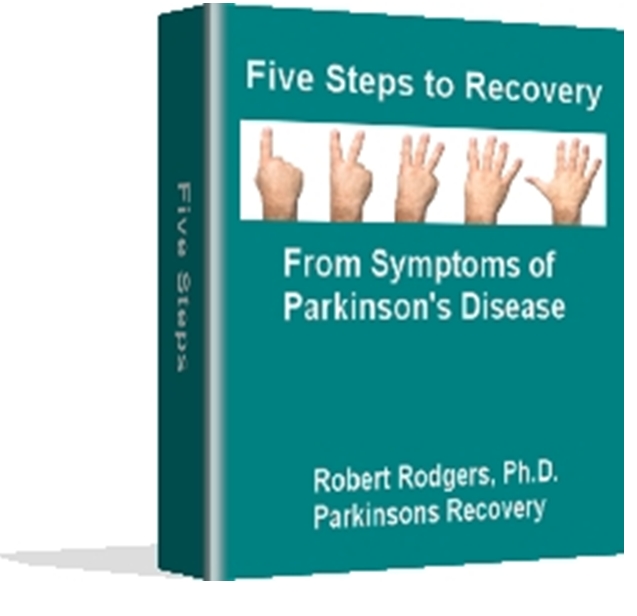
The train story Monica refers to is found in Five Steps to Recovery. As she so eloquently expresses, the real block to recovery is our deepest fear about what we will become, not the fear over what we have become.

Our deepest fear is not that we are inadequate. Our deepest fear is that we areour deepest fear about recovery powerful beyond measure. It is out light, not our darkness, that most frightens us. Marianne Williamson

Robert Rodgers, Ph.D.
Founder 2004
Parkinsons Recovery

Remarkable Story of Recovery from Parkinsons

Have been struggling with the ups and downs of recovery? Has your success been terribly frustrating? Check out John Colemans remarkable story of recovery from Parkinsons.

If so, you are not alone. Naturopath John Coleman ND from Australia offers an honestJohn coleman's remarkable story of recovery from Parkinsons account of his journey down the road to recovery which took 3 1/2 years. He is symptom free today. This truly is a remarkable story of recovery from Parkinsons.

John refers to two therapies in particular that were especially helpful to his recovery: Bowen Therapy and the Aquas. More information is provided for each in the links below:

Bowen Therapy
https://www.americanbowen.academy/find-a-bowen-therapy-practitioner

Aquas
https://www.aquas.us

Robert Rodgers PhD
Founder 2004
Parkinsons Recovery
Road to Recovery from Parkinsons Disease

Hydration Benefits

Below are the questions I asked Jaroslov Boublik PhD, one of the researchers who formulated the Aquas, about how and why hydration benefits healing the body from the inside out.  

  • Why can’t we become better hydrated by simply drinking more water?
  • Why do we become more dehydrated as we age?
  • Why is a well hydrated body essential to eliminating toxins from the body?

    How do the following affect hydration?

Salt
Energy Drinks
Coffee
Alcohol
Milk

  • What are the symptoms of dehydration?
  • Do structured water products facilitate better hydration?
  • Does good hydration help alleviate symptoms of diseases?

    Does good hydration improve:

    • Mental clarity?
      Digestion?
      Make us look younger?
    • Body weight?

For more information about the Aquas visit: https://www.aquas.us

Beliefs about Parkinsons

Below are reflections written by a
a woman whose husband has
Parkinson’s who discusses beliefs about
Parkinsons.

Robert Rodgers PhD
Founder 2004
Parkinsons Recovery

“As the middle of July approaches
I am intensely aware that almost
1 year ago my husband was diagnosed
with Parkinsons Disease. I reflect
back on this deeply emotional year
and am actually surprised at some
of our learning and growth plus
the continuous challenges. And
interestingly, I am also aware
of a new sense of joy and intimacy
in our relationship.

But our year did not begin that way.
I go to a school of healing. One
that teaches that energy follows
thought and physical illness may
be a result of our beliefs. Through
our physical illnesses we have an
opportunity to heal ourselves in
the areas of our lives where we
have previously been stuck or have
held unconscious negative thoughts
about ourselves and our lives.

I was very aware that in my
school the line of thought may be,
‘What is it your husband needs to
learn from having Parkinsons?’ and
indeed a classmate did ask me that,
although in a very loving and concerned
way. What are his beliefs about Parkinsons?

I had read the book by Louise Hay,
You Can Heal Your Life where she
correlates probable beliefs about Parkinsons
to fear and an intense desire to control
everything and everyone. Another author,
Karol Truman, adds to this with
several more possibilities:
lack of inner communication, fear of
not being able to control and not
understanding a fear you have which
stops you from believing in what
you do and say.

I gently asked my husband if any of
these feelings or beliefs resonated
for him but nothing did at the time.
As an outside observer, I was wondering
about the possibility of the lack of
communication with his inner or real
self.

As the year unfolded, a big struggle
for my husband was what to say when
people talked to him about Parkinsons
Disease. Someone once said to him
very sincerely, ‘I am sorry about your
diagnosis’ and my husbands response
was to laugh.

I discussed this with him and suggested
that laughing may have been a way not
to feel a deeper emotion. We also
talked about how his response to illness
is an opportunity to teach others and
help them to connect with their own
vulnerabilities, insecurities and
feelings about illness.

The other day we were invited to a
party and my husband was nervous that
Parkinsons would be discussed. We
decided to do some role playing to help
him come up with some responses.

I said to him (as someone previously did
to me), ‘You know, people with Parkinsons
do not have the tremor when they sleep.
He replied, ‘Oh, have you slept with
someone with Parkinsons? I burst
out laughing. Yes, that would be a
good response to that.

Then I asked him what his plans were
for the future now that he had Parkinsons
and he burst out laughing. ‘I am sorry’,
he replied. ‘It is just too serious a
question not to laugh.

Then I got a little tougher. I said,
‘I am sorry about your diagnosis’ and
he very quietly and gently said, ‘I am
sorry too.

Robert Rodgers, Ph.D.
Parkinsons Recovery

© Parkinsons Recovery

Vielight Photobiomodulation

Visit this link to learn about Vielight photobiomodulation devices. https://www.vielight.com. Call them at 877-355-8012 for more information.

Tell the representative you are a member of the Parkinsons Recovery community and they will credit your order with a 10% discount. Or, if you order on line. enter the coupon code healing4me to claim the discount.

I have interviewed Dr. Lew Lim, the CEO of Vielight, on three different occasions since 2018. At the time of my first interview, we did not know whether persons diagnosed with neurological conditions would benefit from using his company’s devices. Now we do!

Visit the youtube presentation below by Dr. Lew Lim where he provides the science behind photobiomodulation and research findings.

YouTube player

The company still offers the opportunity to use any device for 6 months. If you do not experience the relief you seek, you are invited to return the device for an 80% refund. I know of no other company that offers such a generous warranty.

Robert Rodgers PhD
Founder 2004
Parkinsons Recovery
Road to Recovery from Parkinsons Disease

How Do I Wean Myself Off of Sinemet?

I recently found out after 10 years I do NOT have PD. I am trying to get off Sinemet after being on it for 5 years and having a very hard time. I can’t find a single doctor with any experience in getting people OFF Sinemet. The doctor that diagnosed me as not having PD has been backed up by 4 other neurologists. While I have great respect for him I am very worried about NMS or DAWS. My question is How Do I Wean Myself Off of Sinemet?

Since he admits I am a bit of a novelty I am very concerned about his plan to get me off Sinemet in a week. I’ve been tapering very slowly due to debilitating muscle cramps that have torn muscles in my hip and knee. I am afraid this rapid detox while attractive might be fatal if I am living on the edge of DAWS as I suspect I have been for some time.

I would feel much better if I knew of a doctor with experience in weaning people off sinemet. Do you know of any such centers or doctors? I live in central California but can travel.

Thank you.

Laurie

Response to How Do I Wean Myself Off of Sinemet?

I can certainly emphasize with your need to wean yourself off of medication that you do not need. This process takes time and patience. In my research, I recommend a resource who has helped many people wean themselves from one medication or another. Doctors are not trained to help people with such challenges. This is precisely what compounding pharmacists are trained to do. I would thus suggest that you consult with a compounding pharmacist.

A compounding pharmacist will compound a medicine with – say – a 95% potency which you can take for a period of time. If there are no side effects, the potency will gradually be reduced over time – little by little – until you need take none of the medicine. this process may take as long as a year or two. If there are reactions to a reduced potency. Your pharmacist  will increase the dosage, then reduce it more gradually. Compounding pharmacists work closely with doctors as they change the potency of medications for patients.

In summary, you cannot go cold turkey and you cannot get off of the medication within a week. It takes time and patience to wean yourself but it can be done. I suggest you find a compounding pharmacist in your local area and get a consultation.

Robert Rodgers, Ph.D.
Founder 2004
Parkinsons Recovery
Road to Recovery from Parkinsons Disease
http://www.parkinsonsdisease.me

Amino Acid Therapy

This is an edited clip from my interview with Marty Hinz MD in 2018. Dr. Hinz is known internationally for developing amino acid protocol,

He addresses the following questions from me during the program today:

  1. What is the primary cause of Parkinsons disease?
  2. What the most effective Parkinsons disease treatment?
  3. What is carbidopa?
  4. Why is carbidopa used?
  5. How does carbidopa deplete vitamin B6?
  6. What happens when vitamin B6 depletes?

Robert Rodgers PhD
Founder 2004
Parkinsons Recovery
https://www.parkinsonsrecovery.com

Eyelid Apraxia

The most problem I have is with eyelid apraxia. With a little wind or cool air on the bicycle my eyelids drop down and I have to open them with my left finger. Luckily at home and driving a car this problem does not occur.

Do you have any experience with that problem? I really hope you have!

Thank you so much for your mails.

You do great work!

Hans

As you so clearly describe, eyelid apraxia (ALO) is a movement disorder that makes it difficult to open the eyelids. It is found among less than 1% of persons diagnosed with the symptoms of Parkinsons disease.

Possible Cause of Eyelid Apraxia

Eyelid Apraxia can be a side effect of the medication Levodopa which is used to treat Parkinson’s disease. It can also be caused by deep brain stimulation (DBS).

So, one cause to consider (among others) is that the apraxia might be triggered by the side effects of taking Levodopa itself or perhaps modifications to your dosage. Several case studies suggest that withdrawal from Levodopa might cause a symptom of the type of  apraxia you describe.

Does this at all resonate with you? If so, investigate this possibility with your doctor to see if some medication modifications might be indicated.

Robert Rodgers, Ph.D.
Founder 2004
Parkinsons Recovery

Supplement Parkinsons Medications with Fava Beans

I understand that it is possible to supplement Parkinsons medications with fava beans. I take meds 5x / day, have had Parkinson’s for 8 years and am 60 years old. My symptoms are fairly well controlled except for a mild tremor.

My neurologist suggested that I not “play around” with fava beans because it would cause spikes in dopamine……………

My question: Should I take an equal amount of fava bean [eg. 1 tsp. ] each time I take my meds to keep the dopamine level steady?

Carolyn

Clearly, it is always best to follow the recommendations of your doctor. I do have some evidence on fava beans that are used to supplement dopamine which I discussed below

About Fava Beans 

I have talked now with a number of people who supplement their medications with fava beans. Fava beans grow in pods much like green beans and are a food that has been around for thousands of years. The bean pods are clearly most effective when they are very young and green, even before a string like fiber forms along the pod.

You can eat the beans after steaming them or boiling them in water. Of course, you can add the seasonings that you like to most like sea salt, butter or herbs.

The best effect comes from eating fava beans that are green and fresh. You can shell them, though some people like eating the shells. Or, you  can grind them up, add them to other foods or beverages or take them like a pill.

Alternatively, you can boil or steam them till they are tender. Add them to salads. The more you cook them, the more they are cooked, the less dopamine enhancing value they will have.

The stories of success vary depending on the person. May I suggest that you click on the categories “fava beans” listed to the right of this post. You will be able to read some of what I have discovered about fava beans there. Fava beans are an attractive option for some people because they are a natural food, though it is always possible some people may have allergies to them.

Cooked fava beans may give you a tiny boast, but the potency can be mostly “cooked out.” Some people grind the raw beans. Other people grind the leaves and roots with good effect.

Other people report good results from growing their own fava beans, harvesting them and then grinding the beans (and/or leaves and stems). If the fava beans are grown commercially they may not have sufficient “charge” and thus have little effect, as is the case with all supplements. This is why some people with the symptoms of Parkinsons are starting to grow their own fava beans.

The concerns of your neurologist are certainly well founded. If the fava beans that you take have a sufficient charge of dopamine, it will overload your body with too much dopamine. Some people I interview consult with doctors who help them adjust their medications as they begin to take the dopamine.

Best results when you supplement parkinsons medications with fava beans is to consider using Aunt Beans fava bean tincture that Aunt Bean invented and uses to reverse her Parkinson’s symptoms. You can find instructions on how to make the tincture from this Parkinsons Recovery website: https://www.favabeans.parkinsonsrecovery.com

Robert Rodgers, Ph.D.
Parkinsons Recovery
www.parkinsonsrecovery.com

Brain Cell Regeneration

In several of your articles about Parkinson’s, it is stated as fact that by the time one experiences the first symptoms of Parkinson’s, 60-80% of the brain cells in the Substantia Nigra area of the brain have been destroyed. If this is a medical fact then how does it stand to reason that the body is merely out of balance or suffering from toxins? Is brain cell regeneration really possible?

I believe that the body can be out of balance but has it suffered the reality of irreversible damage? It is important to have a positive outlook but I also think it is important to be realistic.

I hope I do not sound overly direct because I appreciate all you are doing and have found much of your information to be thought provoking and helpful.

Thanks, A.G.

The estimate that 80% of the dopamine producing cells have been destroyed comes from autopsies of people found to have degradation in the substantia nigra. A startling proportion of persons are misdiagnosed with Parkinson’s – estimates vary from 25% to 33%. It is a tough diagnosis to make and it is easy for doctors to miss the mark on this call.

This means that although the person has symptoms that are like the symptoms of Parkinson’s, they are not being driven by a dopamine deficiency. It may simply be that the myelin sheath coverings around the neurons are clogged by toxins or obstructed by trauma to the tissues. Or, other factors may be at play.

I personally believe that we find ourselves trotting down a dead end alley much too often if the “problem” of Parkinson’s is defined as a dopamine deficiency. The body can always produce sufficient dopamine under the proper conditions. Brain cell regeneration is not only a possibility but a proven fact. And, the body can always generate new cells and rejuvenate itself. Healing becomes possible when the symptoms are viewed in a broader context of health and wellness rather than death and destruction.

At the most basic level, all healing rests on the foundation of thought forms. When we focus on what is not possible, nothing becomes possible. When we set out intention for change and renewal, anything is possible.

I think it is a mistake to focus on the cells that have been destroyed in the body. Cells are being born every micro second. The body can reconstruct anything – cells, neural pathways, tissues – you name it. When we focus on what has been destroyed, we have sunk into the negative thought form trap which leads us into nagging thoughts that recovery is impossible. This is why I wrote the Five Steps to Recovery.

The body can and does rejuvenate itself.

Robert Roders, Ph.D.
Founder 2004
Parkinsons Recovery

Lock Jaw

Slowly her jaw started to cease up. One morning all of her throat and mouth were swollen excessively. She was admitted to hospital sedated and incubated immediately. When the sedation was taken off she was very unresponsive giving the impression of ‘locked-in syndrome’ or ‘brainstem stroke’. 5 months on she is now out of hospital, she has had CT scan, MRI scan, DAT scan and x-rays, given botox into TMJ and treated for tetanus but there is no answer or reason for what happened. All scans came back clear and couldn’t see anything out of the norm for a brain of a PD sufferer and someone of her age 64. She still has lock-jaw and is very weak.

My mum was diagnosed with Parkinsons about 2 years ago. She was using Sinemet but due to dizzy spells and feeling sick she weaned off it. She started to have sore gums so eventually took her teeth out, just upper teeth are dentures.

Could you possibly offer any help or advise,

Nat

As a researcher and not a medical doctor, I am certainly not qualified to suggest and diagnose here. Your Mum’s doctors are certainly working hard trying to figure out what in the world is going on here!

Speaking as a researcher, it looks to me like – speaking simply – there is something inside your Mum’s body that is causing significant inflammation or something that she continues to insert in her body. What is it?

It could be a variety of toxins. It could be an allergic reaction to something she is eating. At a minimum, you could modify her diet and see if there is any change. Something she has loved to eat for years may be the culprit here. It could be side effects of a medication she is taking. There are many possibilities which is why of course her doctors are having such a difficult time figuring out how to help her!

Emotional issues always lie at the foundation of symptoms. You might ask your Mom if there is something she needs to say that she has been withholding. With lock jaw, talking is near impossible. Perhaps you could help her express that she has been unable to say. It could be a life long challenge keeping silent about something she needs to express to you and others. Once the trapped emotion has been cleared the symptom will resolve.

Hang in there. The cause will be found and a treatment used the will lead to symptom relief. One to consider is EMDR. Eye movement desensitization and reprocessing (EMDR) therapy is a mental health treatment technique. This method involves moving her eyes back and forth in a specific way while she process traumatic memories which lie at the root of her lock jaw.

Robert Rodgers, Ph.D.
Founder 2004
Parkinsons Recovery
Road to Recovery from Parkinsons Recovery


Thoughts that Obstruct Recovery

What unwanted beliefs, feelings and thoughts that obstruct recovery do you want to cast off your back ? Obviously we all have our own issues and our own private lists.

Permit me to take the liberty of making one suggestion of a feeling that you might consider adding to your own personal “cast off” list” the shame of currently experiencing Parkinson’s symptoms. Everyone is ashamed to be ill no matter what the diagnosis of the symptoms. In the case of Parkinson’s, shame seems to run especially deep and thick.

Many people who have been told they have Parkinson’s disease do not even tell their family for years and even decades (if ever). They embrace a belief which is untrue that the diagnosis means that they are destined to feel worse and worse over time.

They are convinced that their friends and family will distance themselves when they discover that they have this dreaded condition which carries the label of Parkinson’s. Because they never say anything they have no opportunity to realize this belief is not valid. In this case, thoughts that obstruct recovery are not in your best and highest good.

I know that shame runs deep for a variety of reasons. Here are a few:

  • Conversations with hundreds of persons with Parkinson’s symptoms over the past couple of decades  have revealed the depth of the shame that people experience.
  • When people order one of my books by phone they often tell me that they are ordering the book for a family member or a friend. Sometimes no doubt this is true. Sometimes no doubt they are ordering the book for themselves but are too ashamed to admit it even to me, a total stranger.
  • Parkinsons Recovery memberships provide ongoing support to the Parkinson’s community, a place where options can be explored with other persons who have succeeded in reversing their own symptoms. Few people call in during the live event. Most prefer to listen to the recording. There is such shame associated with even talking with another person even if they too have been diagnosed with Parkinson’s.

Why not set the intention to cast off any and all shame that you might be currently be holding consciously or unconsciously. Often the shame is unconscious.

Why hold onto the shame? A vast majority of the population have neurological challenges. It is really nothing to be ashamed about.

More and more people are identifying the cause of neurological challenges that they happen to be currently experiencing. Once the factors that are causing the symptoms have been identified, solutions can be explored that will help reversing whatever symptoms you may currently experience.

Shame places you in a position of subservience to a concept that has no basis in reality. It is not true that people who happen to have been diagnosed with Parkinsons disease are destined to deteriorate. It is far more likely that they have been misdiagnosed.

People are succeeding in reversing neurological symptoms.

Holding shame in you heart, mind and body is not in your (or anyone’s) best and highest good. Cast the weight of shame off your shoulders today. That is the intention I have set for myself and I invite you to do the same. We all have shame to one degree to another which needs to be cast off now.   

Robert Rodgers, Ph.D.
Founder 2004
Parkinsons Recovery
Road to Recovery from Parkinsons Disease
www.parkinsonsdisease.me

Unshackling Chains of Fear

This is an edited interview with Fred Phillips on Parkinsons Recovery Radio who discusses unshackling the chains of fear that aired in 2017.

Fred Phillips is an author and former martial arts instructor. He was diagnosed withunshackling chains of fear Parkinson’s disease in 2008. Fred discusses his journey with this challenging health condition, his philosophy and approach to recovery and his ten step recovery protocol.

Fred blogs about his experience at fredphillips.wordpress.com. He lives on Manitoulin Island in Ontario, Canada.

Fred discusses his answers to the following questions that all pertain to unshackling chains of fear:

1. How long you have you been experiencing symptoms?

2. What is your philosophy and approach?

3. Why did you choose to recover naturally?

4. What symptoms do you experience?

5. What is your recovery protocol?

6. What has been your greatest challenge?

7. What advice would you offer others experiencing a health challenge?

Robert Rodgers. PhD
Founder of Parkinsons Recovery in 2004
Road to Recovery from Parkinsons Disease

Peripheral Neuropathy and Parkinson’s Disease

Robert: I was diagnosed first as having peripheral neuropathy (non diabetic) in my toes and feet. Next I was found to also have PD.

This is my first introduction to a web site of this kind and hopefully some of my questions and searching for answers can be better directed thru your website. This will be good.

Do many of those who have PD also have a rather contemporaneous onset of neuropathy affecting walking, standing, gait, balance, etc.? Are there places to read on the interrelationship of these two diseases and ways to recover from both at the same time since they both seem to contribute to the loss of mobility?

Thank you in advance for your thoughts.

Sincerely,

Jerry

Randy Eady is known as the Foot Whisperer. I suggest you listen to my interview with him obvious reasons. He is an expert in grounding which will facilitate healing of the condition you describe above

Yes – the Peripheral Neuropathy you describe can be associated with a diagnosis of Parkinson’s. My research reveals large differences in the symptoms of individuals who have been diagnosed with Parkinsons Disease. Each person’s situation is typically unique. The symptoms you experience are very likely to be vastly different from the symptoms of another with the same diagnosis.

You are interested in exploring the two diagnoses (peripheral neuropathy and Parkinson’s) with a focus on allopathic treatment options. I am sorry to report you will not get any insights from the resources and information I provide at Parkinsons Recovery. That is clearly in the domain of medical doctors, Since I am a researcher type (Ph.D.) not a medical doctor, this is clearly not my area of expertise. I gladly refer all such questions to medical doctors.

I also prefer to research the answer to questions that do not focus on the implications of a specific diagnosis. The thinking involves asking what is wrong with your body that needs to be fixed by someone else. I hold the belief that while you are obviously experiencing bothersome symptoms, your body is giving you valuable information about what is out of balance.

I believe your body is working perfectly (though I fully acknowledge this reality is hard to stomach right now). Your body is asking for some adjustments that are necessary to bring your neurological system back into balance. Adjustments may involve some combination of diet, exercise, supplements, body work, detoxes or a whole host of other therapeutic interventions.

Robert Rodgers, Ph.D.
Road to Recovery from Parkinsons Disease
http://www.parkinsonsdisease.me

« Older posts Newer posts »