
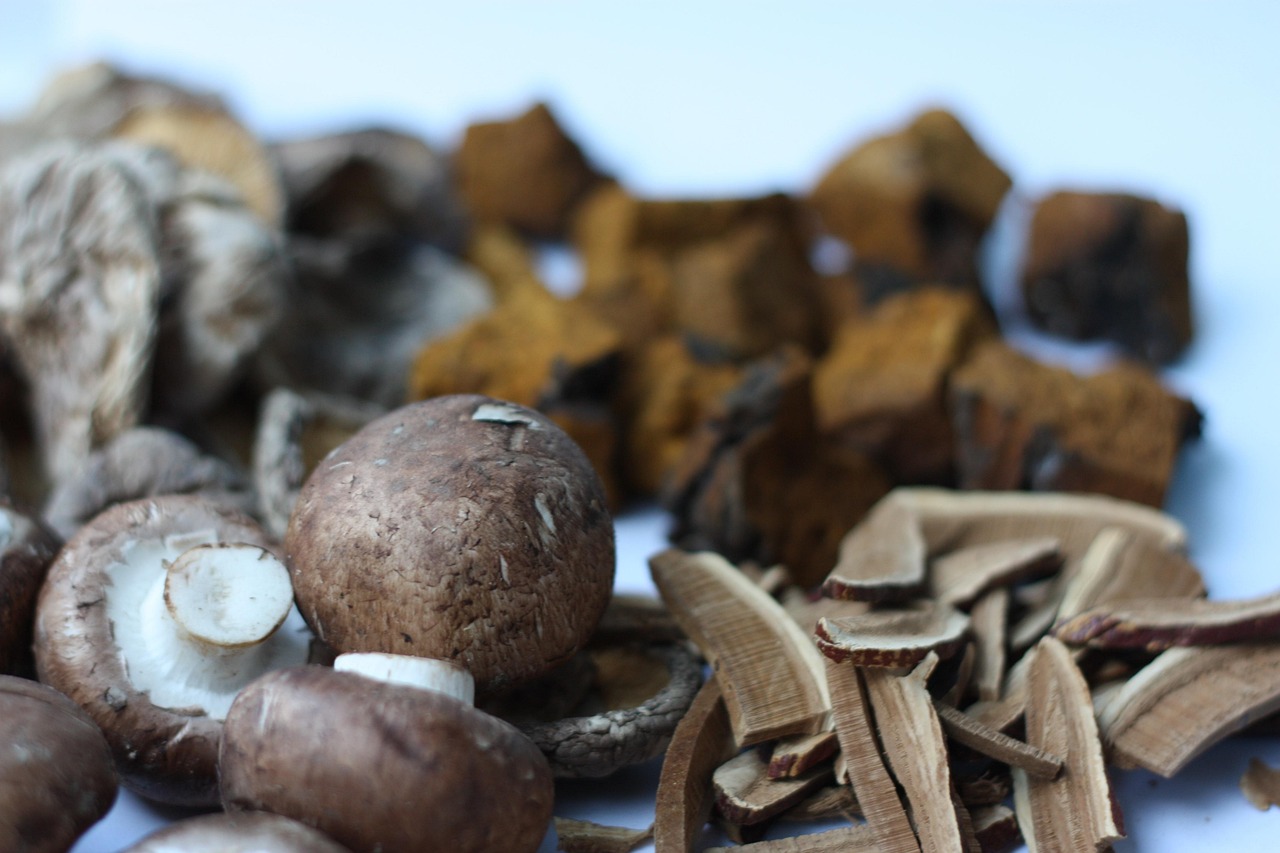
There are amazing benefits for many varieties of mushrooms. Chaga mushroom benefits count as one variety that has attracted the attention of researchers.
Several members of my audience include Chaga as a fundamental to the success of their recovery program. Studies recently find there are hidden chaga mushrooms benefits, though no studies evaluate chaga mushroom benefits for Parkinsons.
One study found that an excessive intake of chaga resulted in renal disease, so moderation is recommended for those who elect to explore this little employed treatment remedy.
What are Chaga Mushrooms?
The fungus of chaga mushroom grows predominantly on birch trees as well as other tree species, including beech, oak, alder, and ash. Chaga appears as a dark brown or black woody growth resembling a crusty, burnt mass on the trunks of these trees.
Beneath its dark woody exterior, chaga has bright rust-colored flesh full of delicious antioxidant compounds. Chaga is not technically a mushroom though it is often referred to a mushroom. t is often called a “medicinal mushroom” because it is also a fungus like mushrooms.
Studies that Report Chaga Mushroom Benefits
Mycology. 2023 Oct 20;15(2):144-161.Therapeutic properties of Inonotus obliquus (Chaga mushroom): A review
Abstract
Inonotus obliquus, also known as Chaga, is a medicinal mushroom that has been used for therapeutic purposes since the sixteenth century. Collections of folk medicine record the application of Chaga for the treatment of diseases such as gastrointestinal cancer, diabetes, bacterial infection, and liver diseases.
Modern research provides scientific evidence of the therapeutic properties of I. obliquus extracts, including anti-inflammatory, antioxidant, anticancer, anti-diabetic, anti-obesity, hepatoprotective, renoprotective, anti-fatigue, antibacterial, and antiviral activities. Various bioactive compounds, including polysaccharides, triterpenoids, polyphenols, and lignin metabolites have been found to be responsible for the health-benefiting properties of I. obliquus. Furthermore, some studies have elucidated the underlying mechanisms of the mushroom’s medicinal effects, revealing the compounds’ interactions with enzymes or proteins of important pathways.
Int J Mol Sci. 2025 May 15;26(10):4729. INO10, a Chaga Mushroom Extract, Alleviates Alzheimer’s Disease-Related Pathology and Cognitive Deficits in 3xTg-AD Mice
Abstract
Alzheimer’s disease (AD) is a progressive neurodegenerative disorder characterized by cognitive impairment with amyloid accumulation, tau hyperphosphorylation, and neuroinflammation. Among these pathological features, microglial activation is hallmark of neuroinflammation.
Chaga (Inonotus obliquus) extract has been traditionally used for its diverse pharmacological properties, including anti-inflammatory and neuroprotective effects. This study aimed to evaluate the therapeutic potential of INO10, an inotodiol-rich chaga extract, in murine BV2 microglial cells and a 3xTg-AD mouse model. In BV2 cells, INO10 significantly reduced LPS-induced expression of pro-inflammatory cytokines (IL-1?, IL-6, TNF-?), indicating its potent anti-inflammatory effects. Oral administration of INO10 significantly improved spatial memory in 3xTg-AD mice, as evidenced by increased spontaneous alternation in the Y-maze test.
Furthermore, INO10 treatment attenuated neuroinflammation, as indicated by reduced microglial activation and downregulated expression of pro-inflammatory cytokines. In addition, immunohistochemical analysis confirmed that INO10 exhibited favorable bioavailability, supporting its potential as a neuroprotective agent. Histological analysis further revealed a reduction in Ab accumulation and tau phosphorylation in the hippocampus, accompanied by a marked decrease in neuroinflammatory markers.
These findings suggest that INO10 effectively mitigates AD-related pathology by reducing deposition, tau hyperphosphorylation, and neuroinflammation, ultimately leading to cognitive enhancement. Given its multi-target neuroprotective properties, INO10 may serve as a promising natural compound for AD treatment
J Korean Med Sci. 2020 May 18;35(19):e122. Development of End Stage Renal Disease after Long-Term Ingestion of Chaga Mushroom: Case Report and Review of Literature
Abstract
Chaga mushrooms are widely used in folk remedies and in alternative medicine. Contrary to many beneficial effects, its adverse effect is rarely reported. We here report a case of end-stage renal disease after long-term taking Chaga mushroom. A 49-year-old Korean man with end stage renal disease (ESRD) was transferred to our hospital. Review of kidney biopsy finding was consistent with chronic tubulointerstitial nephritis with oxalate crystal deposits and drug history revealed long-term exposure to Chaga mushroom powder due to intractable atopic dermatitis.
We suspected the association between Chaga mushroom and oxalate nephropathy, and measured the oxalate content of remained Chaga mushroom. The Chaga mushroom had extremely high oxalate content (14.2/100 g). Estimated daily oxalate intake of our case was 2 times for four years and 5 times for one year higher than that of usual diet.
Chaga mushroom is a potential risk factor of chronic kidney disease considering high oxalate content. Nephrologist should consider oxalate nephropathy in ESRD patients exposed to Chaga mushrooms.
Robert Rodgers PhD
Founder 2004
Parkinsons Recovery®


Leave a Reply