Author: manabunnow4zph (Page 24 of 39)

Q&A Two with Robert Rodgers PhD

Click on the arrow below to access the replay of the Q&A today:

Below is a listing of some of the questions I discussed today.

  • What vitamin complex have you found to be useful for treating Parkinson’s symptoms?
  • Is the Paleo diet recommended?
  • What about a Ketogenic diet?
  • What is the best diet for addressing Parkinson’s symptoms?
  • Parkinsons Recovery has introduced many natural therapies that are helping people
    address the symptoms of Parkinson’s. Why don’t we hear about these wonderful therapies from other sources?
  • Why is there so little discussion about the Marty Hines amino acid therapy? I have found it to be useful.
  • My blood pressure tends to increase when I sleep and am off medications. What can I do about it?
  • What are some natural sources of sugar other than Stevia?
  • Should I go off of Levodopa? It does not help much.
  • How can I massage my own feet?
  • What about drumming to address Parkinson’s symptoms?
  • How about using Shungite?
  • How do I find a FSR (Forceless Spontaneous Release)  practitioner?
  • How does one stop dystonia (my involuntary curling of toes)?
  • How can I best treat infections and viruses naturally?
  • Tell me about promising new treatments for Parkinson’s
  • What about stem cell therapy and deep brain stimulation?

Robert Rodgers PhD
Road to Recovery from Parkinsons Disease
https://www.parkinsonsdisease.me


News Fast

News Fast

News Fast

One easy way to reduce stress is to get serious about a news fast. Am I talking here about getting a little taste of what is up in the world every day? No! The idea here is to go cold turkey on watching, listening or even reading the news.

I have Rita’s permission to post her email to me today. Rita reflects on her own experience with getting serious about her own news fast. Most news does not reduce anxiety. It fuels anxiety. If you are serious about finding ways to reduce whatever symptoms of Parkinson’s disease you might currently be experiencing, I recommend you consider giving a news fast a trial run.

Robert Rodgers PhD
Road to Recovery from Parkinsons Disease

Regarding last week’s mindfulness challenge to take a news fast, I decided to do that. Our ministers in Self-Realization Fellowship, our church, have reminded us from time to time to read and listen to much less news. So after reading your challenge, I realized that I was actually ready to do this.

I don’t listen to the radio except for classical music 20 minutes per day while I ride the stationary bike and we don’t even have our TV connected to watch it. My news addiction is to the newspapers which I have been reading for over 60 years. Â We subscribe to the San Diego Tribune and LA Times. My routine is to sit down to breakfast every morning with the sudoku and then to read the newspapers at each meal. Russ and I both did this every meal. What a deep ingrained habit!

I cancelled both papers yesterday. I realized that there is no way I can escape knowing what is happening in the world so I don’t have to worry. Sudokus I can print or work online for free.

It already feels great – a lightness and sense of escape from a daily subconscious burden of getting the papers read before the end of the day. Hardly anything in the papers is anything that is important for me to know. It’s a relief not to have them coming anymore, even to picking them up in the driveway and recycling them all.

So I am grateful for your challenge; I was ready and it was the final prod I needed to give up the daily barrage of news. Plus we will save $70 per month. Thank you for all the mindfulness e-mails; they are all beneficial whether I can actually implement them or not at the moment.

Sincerely,

Rita

Solutions for Parkinsons Symptoms

On Parkinsons Recovery Radio today. Fred Phillips offered his insights into how he gets immediate relief from a variety of his Parkinson’s symptoms. His solutions for Parkinson’s symptoms are novel and profound. Do you ever have difficulty when walking with:

  • Freezing?
  • Standing up?
  • Shuffling?
  • Slowness?
  • Leg Cramps?

If so, I strongly recommend that You listen to my interview with Fred today. Click the arrow below to hear the replay. Fred has discovered some powerful, yet simple solutions to these
symptoms that have helped him enormously.

One of now over 70 pioneers of recovery I have hosted on Parkinsons Recovery radio, Fred also previews his 10 step protocol for recovery.

Robert Rodgers PhD
Road to Recovery from Parkinsons Disease


It is not Parkinsons Disease

Below is a fascinating email from Nancy who was diagnosed with Parkinsons but wound up discovering it is not Parkinsons disease but a spinal cord injury. I have permission to post her email which tells an exciting story of recovery that emerged for her in a way she could have never imagined or predicted when she launched her journey down the road to recovery three years ago. .

Robert Rodgers PhD
Founder 2004
Road to Recovery from Parkinsons Disease

I was diagnosed with Parkinson’s disease three years ago. Your book was a life-changer for me. I refused to accept the diagnosis. I looked at each symptom and looked for therapies just as you described. I fought with the doctors and refused medication. I accepted that I had the symptoms but not the diagnosis.

I fought back some family members as well as a collective consciousness. Two neurologists and one family M.D. told me to stop fooling myself and accept the diagnosis. My Feldenkrais instructor who happens to be a neurologist suggested I see a neurosurgeon as I have a spinal cord injury in her professional opinion. Turns out she was right I went in for surgery immediately and reversed all of my symptoms and he says I do not have Parkinson’s!

He also said there was a reason why my body refused the medication. Interesting how had I taken the meds I would’ve gone down a rabbit hole. My spinal cord injury dated back 10 years ago. Symptoms started at three or four years ago. Lesson call and never, never, give up and listen to the innate intelligence of your body.

I’m on the road to recovery. Thank you again, Robert The good work that you do! Happy Independence Day!

Best,

Nancy

Tremor Treatments

Here is a short list of questions I answered during the program today on tremor treatments and more:

  • What are the best techniques to reverse Parkinson’s?
  • Are probiotics and pre-biotics helpful?
  • What about juicing to remove heavy metals like lead?
  • How about taking Mucuna for tremors?
  • are there any tremor treatments that are effective?
  • Where does one start when deciding to travel down the road to recovery?
  • What about taking lots of supplements to address the symptoms?
  • I am doing all of the therapies that people say will calm tremors but they continue to increase. Can you recommend tremor treatments that will help?
  • Is ketogenic diet useful to address Parkinson’s symptoms or are there other diets that are better? I am confused. There are so many opinions out there!

Additional Parkinsons Recovery Resources Discussed During the Program

Road to Recovery from Parkinsons Disease
Parkinsons Recovery Memberships:
Treatments for Tremors
Tame Tremors

Seven Secrets to Healing

LDN, Mannitol and Amino Acid Therapy

Today I answer questions on LDN and other natural therapies for Parkinsons. Here is a short list of some of the questions and topics I address:

  • Using a nutritional approach to healing Parkinson’s I now have a healing crisis every 4 days followed by good days. What does this mean?
  • More about LDN for treating symptoms please.
  • What about Mannitol as a treatment for Parkinson’s symptoms?
  • How can I reduce tremors in my left hand and foot and in the upper, inner and left side of my head?
  • When will the 2017 updated Road to Recovery from Parkinsons Disease be available?
  • What about amino acid acid therapy as a therapy?

Robert Rodgers
Founder 2004
Parkinsons Recovery
Road to Recovery from Parkinsons Disease

Relief for Tremors

“What can I do to relieve me of my hand, foot, and inner head tremors or, at least,relief for tremors experience some relief for tremors? The tremors are in my left hand, left foot, and upper, inner, left side of my head. I was diagnosed with Parkinson’s disease in 2014. I declined prescription  medications.”  

Robert Rodgers PhD
Founder 2004
Parkinsons Recovery
Road to Recovery from Parkinsons Disease
Five Steps to Recovery


Remarkable Journey on the Appalachian Trail

Tao (his trail name) hiked the Appalachian trail last year with considerable difficulty. Many of his Parkinson’s symptoms became much worse. I suppose some people would conclude that should be the last extended hike he should take. Not Tao.

I received a call from him today. He is doing another long hike down the Appalachian trail this summer. This year, unlike last, he has had no difficulties. Get this. Tao was able to hike a total of 100 miles in three days. He emailed me an inspiring picture taken of him on a scenic route on the trail.

Robert Rodgers PhD
Founder 2004
Parkinsons Recovery®

Use This Fantastic Technique to Improve Balance

Have Issues with Balance and Mobility?

Here Is A Simple And Effective Strategy

 Watch this 2 minute YouTube video posted by Steve who has Parkinson’s symptoms for a tip that:
  • Is simple to do
  • Can be done right now
  • Requires no practice
  • Involves no training program
  • Is free.

This is by far the best idea I have heard about in a long time that helps improve balance and enhances mobility. I suspect it is effective because it opens up energetic meridians throughout the body that have led to poor posture and drained your energy.

Robert Rodgers PhD
877-526-4646
Parkinsons Recovery
Road to Recovery from Parkinsons Disease
Olympia, Washington

Why Recovery from Parkinson’s Stumbles


I am proud to celebrate the dozens of therapies that are helping more and more people reverse the symptoms associated with a diagnosis of Parkinson’s disease. There are so many great options out there that did not exist five years ago.

If so many great options exist, why do not more people celebrate a reduction and reversal of their Parkinson’s symptoms? Why does recovery from Parkinson’s stumble for so many? My answer: People are gripped by a stranglehold of fear that their symptoms are destined to get worse. The process is “vicious” because symptoms are in your face day in and day out.

Take tremors for example. Tremors can calm down from time to time when stress is under control but they usually reappear.  The reaction to this seemingly never ending cycle is all too familiar.

  1. This tremor is driving me crazy. It is high time for it to disappear.
  2. The next day comes. The tremor persists.
  3. After many days, weeks and months you conclude you are “stuck” with this awful, nasty symptom for life.
  4. After all, this is what seemingly knowledgeable people have told you. Perhaps it is true after all.

What is the problem with this all too familiar pattern? It winds up supporting and sustaining the tremor. I suggest a very different reaction which can break this vicious cycle rather than sustain it.

Instead of viewing the tremor as the “bad guy” in your life, accept the tremor (or other symptoms) as the “good guy.”  Instead of wishing the tremor to vanish, wish it to flourish. Set an intention to allow your body to shake, rattle and roll if that is what your body needs to do in the moment.

Now, I suspect this recommendation must sound crazy to you. A tremor is your body’s way of getting your attention. It is the body’s natural method of releasing trauma and stress. When you suppress a tremor, the energy of trauma gets stuck in your body and sticks to your cells like glue.

When you view a tremor (or other symptoms) as the “bad guy” you  are giving your body a nasty message that it is broken.  But, it not broken now and never has been. Your body is working perfectly. It is just telling you something you do not want to hear or accept.

Treat a tremor (and other symptoms) as a natural healing response which is nudging you to set in motion new lifestyle habits.

  • Instead of resisting, why not make the changes?
  • Embrace new habits that you know in your mind, heart and soul are necessary to heal.

The best way to reverse the vicious cycle that leads to feeling worse is to acknowledge symptoms as the “good guys.” In so doing, you honor and acknowledge the body’s sacred ability to heal. Treat your body as broken and worthless and it will respond accordingly just as you do when treated with disrespect.

Robert Rodgers PhD
Road to Recovery from Parkinsons Disease
Parkinsons Recovery
www.parkinsonsrecovery.com

The Secret to Healing Parkinson’s

My research over the past decade has identified dozens of therapies that help people reverse the symptoms associated with a diagnosis of Parkinson’s disease. Therapies that
show resounding success for some people fizzle for others.

The surprise discovery is that many therapies help. Great.  OK. What do these therapies all have in common?

My answer may surprise you. Therapies that help people heal from neurological difficulties offer ways to settle and calm the sympathetic nervous system. This opens the opportunity
for the parasympathetic nervous system to function as designed.

We all exert control over our sympathetic nervous system. When we confront a hungry bear on the wilderness trail while hiking, we activate an instant rush of adrenaline to address the challenge.  Our response may be to fight, freeze or flight.

When the sympathetic nervous system is constantly churning and, for some with Parkinson’s symptoms, churning its gears on overdrive, the parasympathetic nervous system becomes overwhelmed. Both are necessary for the body function and survive.

The challenge for people with Parkinson’s symptoms is that the sympathetic nervous system is almost always dominating the parasympathetic  nervous system. In other words, the good guy here (the parasympathetic nervous system) is smothered by the bad guy (the sympathetic nervous system).

How does this play out moment to moment? People who experience Parkinson’s symptoms often have spurts of anxiety, panic attacks or are continuously stressed out with unfounded worries, unrealistic fears or negative thinking that scares the heck out of them. The churning of anxiety pumps out the hormones like adrenaline that stirs excitation throughout the body – so much so that the nervous
system is overstimulated.

Over the long haul deep ruts are carved in the neural pathways which eventually causes the myelin sheaths that cover and protect them to thin. The protective insulation is compromised. A type of “shorting out” occurs just as an electrical circuit short circuits when the insulation covering on the raw wires is exposed.

What then do all of the therapies that help people reverse their symptoms have in common? One therapy or another helps calm down the sympathetic nervous system so that it is not continuously running on overdrive. A body that is continuously running at a furious pace never has an opportunity to rest and rejuvenate. The resting state (the parasympathetic state which is automatic and effortless) gets a little tender loving support
when the sympathetic nervous system is quieted.

The bottom line is this. If you find yourself being nervous and anxious most of the day and night your body will never get the opportunity to rejuvenate and heal itself. Best to let off the steam of the sympathetic nervous system by embracing a therapy that helps reduce its intensity.

Robert Rodgers PhD
Road to Recovery from Parkinsons Disease


Calming of Tremors

Tao gave me permission to post below his email about calming of tremors. It follows.
Robert Rodgers PhD
Founder 2004
Parkinsons Recovery

Yes!!This is so exciting. Last night I clearly noticed a calming of  tremors. This morning there was a time period of it reverting back to only a thumb tremor (how it started roughly 3 yrs ago). This has not happened before.
Also, last night I felt very calm from talking with another soul that truly believes in the bodies memory of wholeness. I’m also amazed at the clearing/calming feeling that blanketed over me while you spoke of the Physical and Energetic relation to Invasion and Parasites as well. To top it all off, I slept over two hours past my usual 4:15 ish inner wake up alarm.
Three new and likely contributing factors added to the menu of remedies and soul reminders from yesterday:
    • A good hard laugh while conversing with Tim B.
    • First 1/2 dose of  SYNCOLEIN
    • An amazing phone consultation with Dr. RR.

This morning I also discovered NIACIN and its relation to PD. I’m already naturally eating some of the best sources of B3 but will add more of the higher niacin foods.

I don’t even want to think about how life would be had I not stumbled on your site when I was rather in a blind panic after a rather cruel presentation of a diagnosis and loosing my friend on same day.
It is again with tears that I share my appreciation for your consistent research and openness to share and find us who seek the path of healing.
Tao

Slightly Used Theracyle for Sale

Here is a notice about a Theracyle for sale. COntact Bob Jones if interested.

Robert Rodgers PhD
Road to Recovery from Parkinsons Disease 

“My wife has Parkinson’s, and to help her stay in fighting shape, we purchased a brand-new Theracycle 200 less than a year ago. But in the meantime, her lower back problems became more serious, so now we’re looking for someone to take the Theracycle off our hands. The bike is fully operational, and has hardly been touched. We’re asking $2500. I’d be very grateful if you were willing to share this information with your friends there on the internet.”

Thanks very much.

Bob Jones
stoic1@me.com

Neurological Diplomacy

Neurological Diplomacy is a Feldenkrais strategy to “make the good side worse” so that the “bad side” can become better. Yes. this sounds totally weird and strange, but it does succeed in reversing symptoms. Really!

I will illustrate the concept by describing an exercise introduced by Ruthy Alon in a Feldenkrais workship. Ruthy Alon is a senior Feldenkrais Trainer and founder of Bones for Life who coined the term “neurological diplomacy”.  I learned all about this technique from an email I received from one of the workshop participants who prefers to remain anonymous. Below is an edited version of the email I received.

An Exercise that Illustrates the Magic
of Neurological Diplomacy

Do the exercise right now so you can experience precisely how and why it works to reduce the symptoms associated with Parkinson’s. There are seven steps.

  1. Pretend to drink water out of a stream, cupping your hands one over the other. Image you are drinking water from a fresh water stream. Sip water out of your two hands as you bring your hands up and down from the imaginary stream. Notice how easy this movement is for you. Notice also which hand is on top of the other as you do this.
  2. Rest a moment.
  3. Now, do the same imaginary movement again, but put the other hand on top. Bring your hands all the way to your mouth to drink the imaginary water. This is not your familiar or easy way of doing it. Chances are good this movement will not feel so comfortable or easy.

How do we go about improving the second way of doing it, the way that is not so familiar and more difficult?  We do not want to directly work with the “bad” side because this is not where the brain is working well. There is a lack of understanding by the brain or a difficulty there.

In the case of a Feldenkrais treatment there may be an injury or pain involved in the “bad side” or “bad movement”. No learning, nor any good outcome, can easily happen when the practitioner works directly with the “bad side”. Rather, the practitioner will leave the “bad side” alone and not attempt to “fix” it.

In summary, do not even think of any side as “bad” or any movement as “bad”. Instead, accept it as it is. Simply leave it alone. Ignore it. Do not even think of changing it.

Doing so is an act of violence. This is the last thing anyone needs who experiences the symptoms of Parkinson’s. 

  1. Now, do the movement the “hard” way again and notice carefully how it was hard and why. Perhaps your shoulders are tighter with that unfamiliar arrangement of the hands. Perhaps the brain is confused. Perhaps the coordination is klutzy in that unfamiliar way. Whatever – notice what you can.
  2. Rest a moment.

Now Comes the Magical Solution

The Heart of Neurological Diplomacy

  1. Now do the easy movement, with the comfortable arrangement of hands one top of the other. Make sipping water difficult by pretending you now have on the “easy side” all the trouble or difficulty you had on the “bad side” with the unfamiliar palm on top.

Play like that for a little while, pretending to imitate the bad movement even though your palms are arranged in the more comfortable arrangement. Try to feel a little frustration about the situation. It is as if you want to convince the brain now that “I do not have any easy way to get a drink of water with my hands.”

  1. Then let it go and rest. Breathe. Forget all about this. Just relax. After a minute or so go back and try to “drink water” with palms arranged in the “bad” or unfamiliar way.

Now, it will be much easier in most cases to make the movement the “hard” way using the more uncomfortable arrangement of hands. If that is not magic I do not know what is!

The surprise of the day is that you did not work with (or pay any attention) to the “bad side” at all! The intervention is magical in this way.

Physical therapists use this technique with stroke patients. They deliberately make the good side and the good movements temporarily restricted with splints or other devices in order to “magically” make the “bad side” better.  If the technique works with stroke patients, it will surely succeed for persons who currently experience Parkinson’s symptoms.

The brain is present, active and intelligent and functional in the “good side” or with the “good movement.” This is where learning can happen – not on the “bad side”.  By “teaching” the good movement to be “bad”, we show the brain how to release that learning, how to release a difficulty just of that exact nature which is transferred automatically over to the “bad side”.

The “bad side” or “bad movement” instantly becomes better without confronting the bad side directly.

  • We do not name the “bad side” or “bad movement” as “wrong” or “bad”.
  • We do not attempt to correct the “bad side” (which is the strategy most people engage).
  • We do not call it to be “wrong” or “stupid”.
  • We do not try to correct it.
  • We do not even think about correcting it.

Neurological diplomacy is an extremely gentle and respectful way of working with the body. That is why it is called Neurological Diplomacy.

In summary, do not declare war on your “bad side” or “bad movement”.  Become diplomatic in your approach. Be respective of your body’s ability to self correct. I will say it one more time. This really is magic at its best.

Robert Rodgers PhD
Road to Recovery from Parkinsons Disease


Betrayal Series free Access Ends Tonight

As the title of this post announces, free access to all 7 videos in the Betrayal series ends tonight. I understand he opened up the 7 part series for free viewing for this weekend only. (The series had also been available for free viewing last weekend as well).

You really do not want to miss this. Check out at least the sixth video which focuses on the brain and neurological diseases. The seventh video is also interesting in that the people discussing their recovery have not been diagnosed with Parkinson’s, but about 50% of the symptoms they discuss are the same as would be reported by a person diagnosed with Parkinson’s. I also personally benefited from watching Tom answer questions submitted by viewers.

I have personally found something useful in each of the 7 videos and bet you will too. Taking the time to watch has been a sound investment for me and my entire family. Please send the link below to friends and family who are searching for viable solutions to their health problems.

About the Betrayal Series

 For more information about this awesome series of videos, click on the banner below to watch a 6 minute video about this fascinating new series hosted by Dr. Tom O’Bryan. The content has profound implications for people with Parkinson’s symptoms as well as other illnesses.


Robert Rodgers PhD
Parkinsons Recovery

Interview with Betrayal Series Host Dr. Tom O’Bryan

Here are some of the questions Betrayal series Host Dr. O’Byran answered on the Parkinsons Recovery radio show this week: 
  • Which gut tests do you recommend for folks with Parkinson’s?
  • Could Parkinson’s disease be considered in any way shape or form an Autoimmunine disease?
  • What tests do you need to determine what toxins, nutrient and mineral excess of deficiencies, etc. you have?
  • I am fighting to reverse my PD symptoms, which are a left hand tremor and a left shoulder freeze. My symptoms have lessened in intensity, but do you have a suggestion of what I can do? 
  • Quite a lot of calories come from gluten foods and dairy (I don’t eat processed foods or drinks) so I would like your advice on how best to maintain my calorie intake.
  • What do you think about microwaves?
  • I think It was mentioned in Betrayal episode 3 that the blood test for gluten intolerance was not fine enough to pick up all intolerances. Is there a test which we can ask for which is more accurate?
  • Would you pass along a name of a Functional Medicine Consultant with experience in Parkinsons Disease in my area or at least how to seek one out?
  • Could you be more specific about diet recommendations? Do you have general guidelines regarding diet?
Click on the link below to hear the replay of my interview with Dr. O’Bryan.    
 

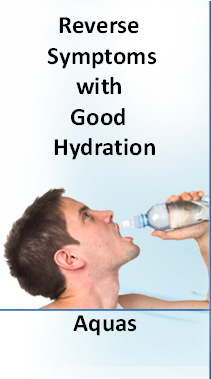
Good Hydration Is Critical to Recovery

Listen to a Q&A with an international expert on hydration who discusses why good hydration is critical to recovery. Jaroslav Boublik PhD is the “go to” resource for how to drink the right water to hydration cells throughout your body which makes for good hydration.

Good Hydration

Good Hydration

When you your doctor answers the question: “What can I do to feel better?” by saying – “Drink more water” Do not laugh. Your doctor is probably right.

Dr. Boublik is, in my book of experts, the international expert on why good hydration is critical to recovery from Parkinsons. His research centers around the effects of dehydration. Dr. Boublik answers questions about the effects of dehydration on your health and how you can realistically address problems such as:

  • Why do we get dehydrated as we age?
  • Why is hydration so important to eliminate toxins?
  • If I add such substances to my diet such as – salt, energy drinks, coffee, tea, alcohol, colas, milk – will I be better hydrated?
  • What are the symptoms of dehydration?
  • Is drinking structured water a good idea?
  • Can good hydration reduce Parkinson’s symptoms?
  • Will better hydration enhance mental clarity?

Jaroslov Boublik is also one of the two amazing developers of the Aquas (https://www.aquas.us) a homeopathic treatment for dehydration.

Robert Rodgers PhD
Founder 2004
Parkinsons Recovery
Road to Recovery from Parkinsons Disease

Rewiring the Brain

My guest on Parkinsons Recovery Radio is Annie Hopper who developed The Dynamic Neural Retraining System as a therapeutic approach to rewiring the brain. Thousands of people have applied her novel program for varying chronic illnesses with great success. Focus of the program is to teach participants how to self-direct neuro-plastic changes in the limbic system that normalize threat mechanisms in the brain. This allows the brain and body to move out of a state of survival and into a state of growth and repair, where healing can take place.

What is the Limbic System?

The following is an eloquent explanation Annie emailed to me in preparation for the radio show interview tomorrow.

The limbic system is a complex set of structures in the mid brain that includes the hypothalamus, hippocampus, amygdala and cingulate cortex. It has been described as the feeling and reacting brain. It is responsible for the formation of memories and is constantly determining our level of safety. The Limbic System assigns emotional
significance to everything we smell, see, hear, feel, and taste. It is known as the seat of social and emotional intelligence and is the brains anxiety switch. It is closely integrated with the immune system, the endocrine system and the autonomic nervous system.

When not functioning properly due to injury or impairment, the limbic system becomes hypersensitive and begins to react to stimuli that it would usually disregard as not representing a danger to the body. This results in inappropriate activation of the immune, endocrine and autonomic nervous systems that can lead to varied and seemingly unconnected symptoms.

This hypersensitivity of the limbic system causes over-firing of protective and threat mechanisms in the midbrain. This can result in distorted unconscious reactions, sensory perceptions and protective responses.

Similar to post-traumatic stress disorder (PTSD), it seems that limbic system hypersensitivity, or dysfunction, involves impairment to structures within the limbic system of the brain that alter connectivity to the pre-frontal cortex. We hypothesize that the hyperactivity in the limbic system fosters inhibition of the inhibitory networks, which allows the over-stimulation of survival mechanisms. This gives rise to an unconscious and persistent fight or flight response associated with limbic system impairment. Over time,
it is possible this state of hyper arousal can weaken the immune system, and affect systems associated with rest, digestion, detoxification, mood stability as well as motor and cognitive function.

The Dynamic Neural Retraining System was developed in 2008 by Annie Hopper as a therapeutic approach to improving these conditions and rewiring the brain using neuro-plasticity principles. Thousands of people have applied the program for varying chronic illnesses and have had great success. The focus of the program is to effectively teach participants how to self-direct neuro-plastic changes in the limbic system that normalize threat mechanisms in the brain. This allows the brain and body to move out of a state of survival and into a state of growth and repair, where healing can take place.

Robert Rodgers PhD
Founder 2004
Parkinsons Recovery
Road to Recovery from Parkinsons Disease

Heavy Metals and Parkinsons Disease

Naturopath Doctor John Coleman ND from Australia discusses the connection between heavy metals and Parkinson’s disease symptoms. While heavy metals can be a factor, John emphasizes the initiating connection of symptoms to trauma (whether physical, emotional or mental).

Robert Rodgers PhD
Founder 2004
Parkinsons Recovery

« Older posts Newer posts »