Parkinsons Recovery Memberships
https://www.parkinsonsrecovery.com/parkinsons-recovery-membership
Category: Parkinsons Disease Information (Page 11 of 15)
Access 20 years of research focused on identifying natural approaches, therapies and treatments that offer the opportunity to celebrate relief from the symptoms associated with a diagnosis of Parkinsons disease.
My research over the past decade has identified dozens of therapies that help people reverse the symptoms associated with a diagnosis of Parkinson’s disease. Therapies that
show resounding success for some people fizzle for others.
The surprise discovery is that many therapies help. Great. Â OK. What do these therapies all have in common?
My answer may surprise you. Therapies that help people heal from neurological difficulties offer ways to settle and calm the sympathetic nervous system. This opens the opportunity
for the parasympathetic nervous system to function as designed.
We all exert control over our sympathetic nervous system. When we confront a hungry bear on the wilderness trail while hiking, we activate an instant rush of adrenaline to address the challenge.  Our response may be to fight, freeze or flight.
When the sympathetic nervous system is constantly churning and, for some with Parkinson’s symptoms, churning its gears on overdrive, the parasympathetic nervous system becomes overwhelmed. Both are necessary for the body function and survive.
The challenge for people with Parkinson’s symptoms is that the sympathetic nervous system is almost always dominating the parasympathetic  nervous system. In other words, the good guy here (the parasympathetic nervous system) is smothered by the bad guy (the sympathetic nervous system).
How does this play out moment to moment? People who experience Parkinson’s symptoms often have spurts of anxiety, panic attacks or are continuously stressed out with unfounded worries, unrealistic fears or negative thinking that scares the heck out of them. The churning of anxiety pumps out the hormones like adrenaline that stirs excitation throughout the body – so much so that the nervous
system is overstimulated.
Over the long haul deep ruts are carved in the neural pathways which eventually causes the myelin sheaths that cover and protect them to thin. The protective insulation is compromised. A type of “shorting out” occurs just as an electrical circuit short circuits when the insulation covering on the raw wires is exposed.
What then do all of the therapies that help people reverse their symptoms have in common? One therapy or another helps calm down the sympathetic nervous system so that it is not continuously running on overdrive. A body that is continuously running at a furious pace never has an opportunity to rest and rejuvenate. The resting state (the parasympathetic state which is automatic and effortless) gets a little tender loving support
when the sympathetic nervous system is quieted.
The bottom line is this. If you find yourself being nervous and anxious most of the day and night your body will never get the opportunity to rejuvenate and heal itself. Best to let off the steam of the sympathetic nervous system by embracing a therapy that helps reduce its intensity.
Robert Rodgers PhD
Road to Recovery from Parkinsons Disease
Here is a notice about a Theracyle for sale. COntact Bob Jones if interested.
Robert Rodgers PhD
Road to Recovery from Parkinsons DiseaseÂ
“My wife has Parkinson’s, and to help her stay in fighting shape, we purchased a brand-new Theracycle 200 less than a year ago. But in the meantime, her lower back problems became more serious, so now we’re looking for someone to take the Theracycle off our hands. The bike is fully operational, and has hardly been touched. We’re asking $2500. I’d be very grateful if you were willing to share this information with your friends there on the internet.”
Thanks very much.
Bob Jones
stoic1@me.com
Here is a fantastic twist on the idea of making the “good side” worse to make the “bad side” better. Look in the mirror when you do this exercise. It is even more powerful.
Also, be sure to tap into all the deep feelings your have about your “bad side.” Make the exercise more than a thinking exercise. Â Treat your “good side” just like you treat your “bad side.”
This really does help tremendously. Make it a habit every day for a few minutes.
Robert
Neurological Diplomacy is a Feldenkrais strategy to “make the good side worse†so that the “bad side†can become better. Yes. this sounds totally weird and strange, but it does succeed in reversing symptoms. Really!
I will illustrate the concept by describing an exercise introduced by Ruthy Alon in a Feldenkrais workship. Ruthy Alon is a senior Feldenkrais Trainer and founder of Bones for Life who coined the term “neurological diplomacy”. Â I learned all about this technique from an email I received from one of the workshop participants who prefers to remain anonymous. Below is an edited version of the email I received.
An Exercise that Illustrates the Magic
of Neurological Diplomacy
Do the exercise right now so you can experience precisely how and why it works to reduce the symptoms associated with Parkinson’s. There are seven steps.
- Pretend to drink water out of a stream, cupping your hands one over the other. Image you are drinking water from a fresh water stream. Sip water out of your two hands as you bring your hands up and down from the imaginary stream. Notice how easy this movement is for you. Notice also which hand is on top of the other as you do this.
- Rest a moment.
- Now, do the same imaginary movement again, but put the other hand on top. Bring your hands all the way to your mouth to drink the imaginary water. This is not your familiar or easy way of doing it. Chances are good this movement will not feel so comfortable or easy.
How do we go about improving the second way of doing it, the way that is not so familiar and more difficult?  We do not want to directly work with the “bad†side because this is not where the brain is working well. There is a lack of understanding by the brain or a difficulty there.
In the case of a Feldenkrais treatment there may be an injury or pain involved in the “bad side” or “bad movement”. No learning, nor any good outcome, can easily happen when the practitioner works directly with the “bad side”. Rather, the practitioner will leave the “bad side†alone and not attempt to “fix” it.
In summary, do not even think of any side as “bad” or any movement as “bad”. Instead, accept it as it is. Simply leave it alone. Ignore it. Do not even think of changing it.
Doing so is an act of violence. This is the last thing anyone needs who experiences the symptoms of Parkinson’s.Â
- Now, do the movement the “hard†way again and notice carefully how it was hard and why. Perhaps your shoulders are tighter with that unfamiliar arrangement of the hands. Perhaps the brain is confused. Perhaps the coordination is klutzy in that unfamiliar way. Whatever – notice what you can.
- Rest a moment.
Now Comes the Magical Solution
The Heart of Neurological Diplomacy
- Now do the easy movement, with the comfortable arrangement of hands one top of the other. Make sipping water difficult by pretending you now have on the “easy side†all the trouble or difficulty you had on the “bad side” with the unfamiliar palm on top.
Play like that for a little while, pretending to imitate the bad movement even though your palms are arranged in the more comfortable arrangement. Try to feel a little frustration about the situation. It is as if you want to convince the brain now that “I do not have any easy way to get a drink of water with my hands.”
- Then let it go and rest. Breathe. Forget all about this. Just relax. After a minute or so go back and try to “drink water†with palms arranged in the “bad†or unfamiliar way.
Now, it will be much easier in most cases to make the movement the “hard†way using the more uncomfortable arrangement of hands. If that is not magic I do not know what is!
The surprise of the day is that you did not work with (or pay any attention) to the “bad side” at all! The intervention is magical in this way.
Physical therapists use this technique with stroke patients. They deliberately make the good side and the good movements temporarily restricted with splints or other devices in order to “magically†make the “bad side” better.  If the technique works with stroke patients, it will surely succeed for persons who currently experience Parkinson’s symptoms.
The brain is present, active and intelligent and functional in the “good side†or with the “good movement.†This is where learning can happen – not on the “bad side”.  By “teaching” the good movement to be “bad”, we show the brain how to release that learning, how to release a difficulty just of that exact nature which is transferred automatically over to the “bad sideâ€.
The “bad side†or “bad movement” instantly becomes better without confronting the bad side directly.
- We do not name the “bad side” or “bad movement” as “wrong” or “bad”.
- We do not attempt to correct the “bad side” (which is the strategy most people engage).
- We do not call it to be “wrong” or “stupid”.
- We do not try to correct it.
- We do not even think about correcting it.
Neurological diplomacy is an extremely gentle and respectful way of working with the body. That is why it is called Neurological Diplomacy.
In summary, do not declare war on your “bad side” or “bad movement”. Â Become diplomatic in your approach. Be respective of your body’s ability to self correct. I will say it one more time. This really is magic at its best.
Robert Rodgers PhD
Road to Recovery from Parkinsons Disease
As the title of this post announces, free access to all 7 videos in the Betrayal series ends tonight. I understand he opened up the 7 part series for free viewing for this weekend only. (The series had also been available for free viewing last weekend as well).
You really do not want to miss this. Check out at least the sixth video which focuses on the brain and neurological diseases. The seventh video is also interesting in that the people discussing their recovery have not been diagnosed with Parkinson’s, but about 50% of the symptoms they discuss are the same as would be reported by a person diagnosed with Parkinson’s. I also personally benefited from watching Tom answer questions submitted by viewers.
I have personally found something useful in each of the 7 videos and bet you will too. Taking the time to watch has been a sound investment for me and my entire family. Please send the link below to friends and family who are searching for viable solutions to their health problems.
About the Betrayal Series
Robert Rodgers PhD
Parkinsons Recovery
- What is the bottom line to recovery from Parkinson’s disease?
- What is the secret to making recovery from Parkinson’s disease happen?
Most people hold near and dear to their heart the beliefs that recovery has to …
- Take years to unfold
- Requires medications and supplements
- Happens for only a select few
- Involves expensive therapies
- Happens only when you find the right therapist, health care practitioner or doctor who has the secret answer to recovery
- Calls for outside interventions of one form or another
I used to believe all of this was true. Not today. I hold a much different belief that recovery is possible for
- Anyone
- Anywhere
- Anytime
Anytime Can Mean Starting Today
Why do I embrace this seemingly outrageous belief?
Naturopath John Coleman ND discusses the ups and downs of his own recovery from Parkinson’s disease in this clip of my interview with him.
Many people who experience symptoms of Parkinsons have told me about unexpected blocks of time (a few minutes, hours, days) when their symptoms disappeared completely.
Surprisingly. these accounts more often than not involve situations which cannot be explained by taking (or not taking) medications or supplements or turning on or off a DBS battery connection.
Is this a familiar circumstance for you? Have you celebrated the quieting of symptoms unexpectedly? If it has ever happened once for you, I believe it can happen all the time.
What usually happens in when symptoms are unexpectedly quieted?
Our own thoughts are our undoing. The thinking process is something like:
- Wow. I feel great. I feel normal.
- Wait. this is not supposed to happen.
- I have Parkinsons Disease. I am supposed to get worse, not better.
- It feels a bit strange to feel so good.
- I do not deserve to feel so damn good.
- When any minor evidence of a symptoms resurfaces the thought is: Oh right. There it is again. I know I will never be rid of this. I might as well get used to it.
- Fear sizzles throughout the cells of the body
Almost all success stories involve people who have found ways to acknowledge when …
- Fear rears its ugly head
- Anxiety soars
- Stress sizzles
- Worries rattle over and over in our mind
And
Once fears, anxieties, stresses and worries are recognized, any and all unwanted feelings are quieted and calmed, allowing the physical body to return to a state of balance and harmony.
The answer lies entirely within your ability to recognize and release stress and anxiety in the moment. In other words, you can make it happen for yourself now. This put you…
In full control over your recovery
What are the triggers in your life? What sets you off? A wide variety of stimuli can “set us off” into a spiral. The possibilities of triggers are endless.
- Smells?
- People?
- Strangers who look like certain people?
- Noises?
- Colors?
- Shapes?
- Words other people use?
- Memories?
- Touching of one type or another?
- Invasive actions by others?
- People who want to control you?
- Thoughts about the future?
- Frets about the past?
You may never intellectually understand why any of the above sets you off and inflames fear and/or anxiety. It just does. End of story.
I believe the answer is not to attempt to sort through the reasons why (something like the smell of a certain perfume sets you off, but to recognize what you get upset and immediately Change the Channel
It is like you are watching a movie that is upsetting you so what do you do?
- You immediately stop watching the bad movie.
- Then you change the channel to something that is pleasing to your soul.
When stress is dissolved, symptoms immediately dissolve like an ice cream cone melting in the hot summer sun. Set the intention to make it so with each and every moment of your life from henceforth.
The best deal of becoming aware of your wanted reactions each and every moment and quieting them in the moment they flare is that the therapy is entirely free!
Robert Rodgers PhD
Founder 2004
Parkinsons Recovery
Road to Recovery from Parkinsons Disease
Naturopath Doctor John Coleman ND from Australia discusses the connection between heavy metals and Parkinson’s disease symptoms. While heavy metals can be a factor, John emphasizes the initiating connection of symptoms to trauma (whether physical, emotional or mental).
Robert Rodgers PhD
Founder 2004
Parkinsons Recovery
Naturopath John Coleman, ND, discovered that using the Aqua Hydration Formula was a critical factor to his own recovery from Parkinson’s Disease. John is one of the first persons to my knowledge who succeeded in reversing his Parkinson’s symptoms in the mid 1990’s.
I interviewed one of the developers of the Aqua Hydration Formula, Dr. Jaroslav Boublik PhD, who answered questions about the Aquas and their use in addressing the symptoms of Parkinsons Disease.
Are you taking all the best medicines and supplements for your Parkinson’s symptoms and doing the exercises recommendedby the experts and yet not seeing a reversal of your symptoms? I have a good guess for you about why.
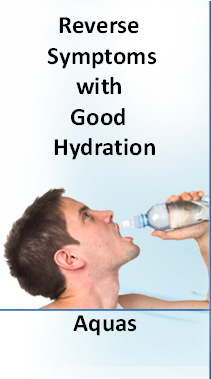
You may be dehydrated. Simply put, your body cannot take in the nutrients nor discharge the toxins if there is not enough water in your body.
When you your doctor answers the question: “What can I do to feel better?” by saying – “Drink more water,” do not laugh. Your doctor is probably right.
Dr. Boublik is my book of experts is the international expert on water and hydration. His research centers around the effects of dehydration. Dr. Boublik answers questions about the effects of dehydration on your health and how you can realistically address the problem such as:
Why do we get dehydrated as we age?
Why is hydration so important to eliminate toxins?
If I add such substances to my diet such as – salt, energy drinks, coffee, tea, alcohol, colas, milk – will I be better hydrated?
What are the symptoms of dehydration?
Is drinking structured water a good idea?
Can good hydration reduce Parkinson’s symptoms?
Will better hydration enhance mental clarity?
Jaroslov Boublik is also one of the two developers of the Aquas (www.aquas.us) a homeopathic treatment for dehydration.
For more information about the Aqua hydration formula visit: https://www.aquas.us
Robert Rodgers PhD
Founder 2004
Parkinsons Recovery
Yoga for Parkinson’s
I have aired several Parkinsons Recovery Radio shows over the years about doing yoga for Parkinson’s. People generally report a positive experience. It gets the oxygen moving throughout their body and is great exercise.
What follows is an email from Steve who offers a fresh perspective on yoga.
Robert Rodgers PhD
Road to Recovery from Parkinsons DiseaseÂ
In Touch of Life: The Healing Power of the Natural Life Force, author Robert Fulford,
a gifted doctor and healer, shares his wisdom after a 70 year career of healing  with the hands. I treasure like his insights. They come from clinical experience, not book learning. It is authentic knowledge.
Dr. Fulford argues that most yoga teachers and some students are heavily damaged from doing yoga. The damage can be for life since their ligaments have usually become over lax from aggressive stretching. He strongly cautions about doing yoga. This is 70 years experience speaking.
Actually muscles do not stretch. The primary focus of yoga in ancient days was not stretching! When the west got hold of yoga that is what happened.
I paraphrase next from the wisdom of Ruthy Alon who is my gold standard when it comes to knowledge about human movement.
- Yoga is from the East where people are more receptive, have less ego, are more culture oriented and don’t have a strong self identity and all that goes along with that.
- It is the opposite in the West where a strong ego and self-identity are needed to just survive.
Yoga poses strengthen the self-identity and will and are perfect to balance the Eastern psyche. Taken to the West, they can over balance the westerner who is already too strong in ego and self identity. For the western world it would be better for people to do flowing energy movements like Tai Chi, Qigong, Feldenkrais and the like as these therapies soften and harmonize the being in a way that yoga cannot do.
This also is 70 plus years of wisdom speaking from Ruthy.
Steve
Hooray I say. We can all celebrate still another story of recovery from Parkinson’s disease. Manfred Poggel is German, but his story is now available in a Kindle English ebook: Parkinson’s disease- How I was Healed Without Chemicals
Poggel shares his experiences with using over 30 different therapies. Moreover, he describes his very personal way to recovery through approaches like de-acidification, meditation, acupuncture, homeopathy and many more. His main concern is to show ways of early detection and prevention.
An edited version of his kindle ebook’s description follows:
“From 2002 onwards, his Parkinson’s disease became so severe that by 2003 he was no longer able to work. The dreaded diagnosis of Parkinson’s disease was officially confirmed in 2004…He began his search for effective healing at the end of 2006. After phasing out the use of chemical medications, various connections between causes and effects became clear.â€
“He recorded and checked all of the tips he was given and evaluated them for himself. It was a difficult process. It was not easy to choose the therapies that were right for him. Nevertheless, he dared to try them because he always, always had the feeling that he was being guided and that he would become healthy again.
“In autumn 2010, he was finally able to stop using his natural therapies. Today he can say that he is healed. He has overcome not only Parkinson’s disease but also all other illnesses from earlier in his life. Over these years he learnt to change his lifestyle and diet.â€
Robert Rodgers PhD
Road to Recovery from Parkinsons Disease
Parkinson’s Disease New Treatment
Below is a play by play account of how one man who currently experiences the symptoms of Parkinson’s receives tremendous therapeutic advantage by intentionally making his “good side†worse. This Parkinson’s disease new treatment is counter-intuitive to be sure.
- Why in the world would anyone want to make their “good side” worse when they already have one “bad side”?
- Wouldn’t you then be straddled with two “bad sides” and not just “one bad” side?
The answer to both questions is “no“. Check out my previous post on “Neurological Diplomacy†to understand why.
This Parkinson’s disease new treatment costs absolutely nothing and insures you are in complete control.
- No one is doing anything to you.
- No therapists are required or necessary.
- This Parkinson’s Disease new treatment is free.Â
The example below applies the principle of Neurological Diplomacy to a trembling right arm and hand. The account was emailed to me by an individual who prefers to remain anonymous. What follows is the description he emailed to me which I have liberally edited.  He wanted to get this information out to others who experience symptoms of Parkinson’s disease because the approach has been so helpful to him personally.
First of all, I only do this after my cold morning shower when I am already moaning and trembling from the cold water. My body feels energized then too. Other times of the day I do not do this technique. Admittedly it looks weird for someone else to see, so I do this when no one else is watching me. I’d be too self-conscious to do it in front of an audience. Also, I need high energy to do this technique.
After my cold shower (which is the time of the day when I have high energy)  I make my “good†left hand and arm and “good” left side shake and shudder like the dickens out of control. I literally act like a crazy man. I would not want anyone to see me doing this. They would think I was insane.
I do this maybe 10 to 20 seconds maximum. My thought process goes something like this:
“OK body if you want to see a tremble I will SHOW you a real tremble. You think that pathetic tremble on the right side is something? Let me show you a real shudder and shake. “
I try to make the left side (my “good side) feel just like the right side. In this space –
- I am out of control.
- There is no way to fix this.
- I am totally frustrated.
- I am completely disabled and cannot function at all since both sides are trembling to beat the band.
- Then, I stop, dry myself and dress.
Here is the good news. I have had less or no trembling on the right side (my “bad sideâ€) as the months go by. The length of time with no trembling is increasing.
The outcome varies. Sometimes I get poor results. Usually I get some results. It might be seconds or minutes of no trembling on the right side, but it is usually longer. Sometimes, and increasingly so, all morning until later afternoon, I have little or zero trembling on my right (“bad”) side.
That is the dramatic version that I would never do in public… something that I have made a daily routine as a finish my morning shower. You certainly do not have to be nude to do this. Loose clothing works just as well.
I also practice a scaled down version during the day when I sometimes imitate the right side tremble on the left side with the intention of getting a frustrated feeling about it. My intention is to help my brain work on a correction.
Sometimes I do this “homeopathically†where one cannot even see what I am doing. Or, I create the conditions in my imagination. You do not even see my tremoring on my “good†side.
Admittedly, such efforts do not work as well as my morning shower routine. But each time I do it – bold and brazen or just in the imagination – I always feel currents and shudders along the spine that feel to me like I am “waking up.†Usually, I get seconds or minutes of less or no trembling in the right arm. Intuitively, using such intuition as I have, all this feels to me like the very best thing I am doing for my Parkinson’s symptoms.
Anonymous
Why not give this Parkinson’s Disease new treatment some serious attention? There is nothing to lose and everything to gain. Best of all, this Parkinson’s disease new treatment has no side effects. The only expectation is improvement on some level.
Robert Rodgers PhD
Road to Recovery from Parkinsons DiseaseÂ

Robert Rodgers PhD
Road to Recovery from Parkinsons Disease
Dehydration causes serious neurological problems if you do not take action now. Why ask for more problems?
When I ask people who have been diagnosed with Parkinson’s disease the question “Do you drink enough water” the answer I hear most often is “no.” This is summer time in the western hemisphere. It is already sizzling hot in many places in the US and elsewhere.
Look out if the neural pathways dry out. The neurological system has to be “wet” and “juicy” to function. Toxins stick to the neurons like glue.
I just recorded a new YouTube video to inspire everyone to drink more water because of the problems in the body that are causes by dehydration. Listen right now to get inspired to hydrate your cells. Say “no” to dehydration today.

Find information about the Aquas Hydration Formulas here: https://www.aquas.us
Robert Rodgers PhD
Founder 2004
Parkinsons Recovery
Many people believe that the solution to mobility challenges is found in finding the right medications or supplements or herbs to take, not with mobility exercises. After an exciting decade of research into the question of what helps people regain excellent mobility, I have drawn the conclusion that medications or supplements or herbs do not offer a long term solution. Something else – something you would have never guessed – does.
I have concluded that practicing the ability to perform more than one task at a time offers welcome benefits to anyone who currently experiences issues with maintaining good balance and also anyone who fears the prospect of falling when walking. Watch my video below to discover mobility exercises that are fun and simple to do.
For information about the Walk with Ease and Confidence program, visit:
http://www.parkinsonsdisease.me
Robert Rodgers PhD
Road to Recovery from Parkinsons Disease
I received the email below which certainly made my day. Reports like this encourage me to continue my research into the various causes of Parkinson’s symptoms and the therapies that help to reverse them.
Robert Rodgers PhD
Road to Recovery from Parkinsons Disease
Robert:
I have read all your books. They are really great. I have had Parkinson’s for five years now and those books have been my crutch. I don’t take any medication and have done it all alternatively. I have used a lot of your ideas and your books are very motivational. I have reversed a lot of my Parkinson’s symptoms. But there is still a few more to do. I don’t listen to your radio show as the time zone is very different. I’m really honored to be in touch with you. Your books are a lifeline to me.
I also wanted to add that your books gave me hope when NONE was around, the only hope friends and family believed in was the medication!!! I just wanted to let you know the great contribution you have made to our/my world. Your books really helped me when I was right right down . I had family and friends but in reality I was alone but I kept rereading your books and taking  small steps. I just kept trying until finally I felt I was on the road to recovery and that’s where I am now. Thank you from the bottom of my heart. I will recover from Parkinson’s, It’ just finding what needs tweaking for me/you being the car mechanic😊Catherina
Thank you again.
Gait Disturbance and the Critical Role of New Neural Pathways
I have concluded that after a decade of research, most people believe the way to correct gait disturbances is to keep close watch over the medications and supplements they take. Problems surface when medications (or supplements) no longer work. It is certainly logical to conclude that the problem centers on an issue with the type or dose of medicines.
I disagree with this conclusion. Â Even when the underlying causes of a gait disturbance has been addressed and healed (such as clearing out toxins, releasing traumas and eliminating infections) a person is likely to continue to experience gait disturbances. But why is the so?
The body has slipped into some bad habits. The safe and effortless way to move has to be re-remembered. In this video, I highlight a brief clip that demonstrates what one rehabilitation clinic is doing to help the body “re-remember” how to move the right (and upright) way.
Discover the strategies, therapies and programs that will help you Walk with Ease and Confidence.  Register for a membership by clicking below.
For more information about Walk with Ease and Confidence memberships visit:
http://www.parkinsonsdisease.meÂ
Robert Rodgers PhD
Road to Recovery from Parkinsons Disease
No doubt many factors contribute to ataxia gait disturbances, but one plays a central role. Such disturbances (which is a fancy way of saying a person is having difficulty walking) are more prevalent and problematic when a person is multi-tasking. When walking alone and totally focused on the task of walking, ataxia gait difficulties are minor. In contrast, when walking and talking with a friend at the very same time, ataxia gait disturbances can become problematic.
OK. So that is the problem. What can you do about an ataxia gait when you walk? An eloquent solution is to practice multi-tasking with totally fun and engaging exercises that coordinate the intricate interactions between the mind and body. For a suggestion of just such an exercise, watch my short video below.
Discover other strategies, therapies and programs that will convert an ataxia gait problem to rock solid walking in the Parkinsons Recovery online course Rock Solid Walking.
Robert Rodgers PhD
Founder 2004
https://www.Parkinsonsrecovery.com
In a recent Parkinsons Recovery Radio show, Bill Hubert made an interesting observation. People with mobility problems often walk with one long step followed up by a short step. That is to say, the right step is consistently longer than the left (or vice versa). This is described by some observers as a Parkinsons Shuffle. Shuffles can eventually lead to falls.
So much for describing what is a common problem with an abnormality of gait for a surprising number of people. What in the world can be done about this problem?
In this video, Bill Hubert from Bal-A-Vis-X describes a simple therapy that corrects the Parkinsons Shuffle.
What is Bal-A-Vis-X? This is is an exciting program designed and created by Bill Hubert from Wichita, Kansas. I believe his ideas and approach can have a profound influence on the ability of persons who experience Parkinson’s symptoms to find compelling relief.
Do you have difficulty with walking or freezing?
I believe his program offers promise that mobility can be significantly improved.
- Do you use a walker?
I believe his technology and approach can make you entirely independent again.
- Do you fall occasionally or often?
I believe his program offers the possibility of reducing if not preventing falls altogether.
- Are you currently bound to a wheel chair or fear you will be in the near future?
I believe his program can help you become independently mobile.
Discover the strategies, therapies and programs that convert problematic mobility to one that is rock solid in the Parkinsons Recovery Rock Solid Walking Online Course.
Robert Rodgers PhD
Founder 2004
Parkinsons Recovery
Many persons who have issues walking with ease and confidence engage a battle with stuck muscles. They are determined to make their muscles stop behaving badly! When a war is declared on the delicate tissues of body gait issues become even more problematic. Muscles tighten up. The body becomes as rock solid as the Rocky Mountains.
In the following video, I explain why attempting to “force” the body to move “normally” backfires every time,
Robert Rodgers PhD
www.parkinsonsdisease.me